Have you ever wondered how websites and applications come together seamlessly? Fullstack development might be the answer you’ve been looking for. From interactive user interfaces to complex backend databases, fullstack developers are the architects behind modern digital experiences.
In today’s tech-driven world, fullstack developers are in high demand, both in the USA and Pakistan. According to recent industry reports, 72% of web development companies are seeking skilled fullstack developers for their versatile skill set. If you’re wondering how these professionals juggle frontend and backend development, you’re in the right place.
This blog post will guide you through the world of fullstack web development, helping you understand its core principles, technologies, and how this can impact your business or career. By the end, you’ll be ready to dive into the world of fullstack development and apply your newfound knowledge.
What is a Fullstack Developer?
Fullstack Development Defined
A fullstack developer is someone who possesses expertise in both frontend and backend web development. These developers are responsible for creating the entire web application, from the interface that users interact with to the databases that store critical information. Fullstack developers are valuable because they can handle both sides of the development process, ensuring smooth communication and integration between them.
Frontend refers to everything users see on a website or web application, such as text, images, buttons, and navigation menus. Backend, on the other hand, deals with server-side operations, like databases, application logic, and user authentication.
Pro Tip: Being a fullstack developer doesn’t mean knowing everything—it means being versatile enough to manage all the key aspects of a web application, regardless of whether you’re working on the frontend or backend.
Why Should You Care About Fullstack Development?
If you’re a business owner or marketer, the importance of having a fullstack developer on your team cannot be overstated. Their expertise enables you to have a more cohesive digital product, from seamless user experiences to optimized backend functionality. Whether you’re building a WordPress site, an eCommerce platform, or a custom web application, fullstack development ensures that all components of your digital presence work together harmoniously.
What Skills Does a Fullstack Developer Need?
The Frontend Technologies
The frontend is where users engage with your application. A fullstack developer must have a solid grasp of various frontend technologies that allow for building responsive and interactive user interfaces. These include:
- HTML (HyperText Markup Language) for structuring web content.
- CSS (Cascading Style Sheets) for designing the look and layout of the page.
- JavaScript for creating interactive elements like forms, sliders, and animations.
- React and Angular are two of the most popular frontend frameworks today, offering reusable components and fast rendering.
Example: For an eCommerce website, a fullstack developer might use React for the product display, enabling smooth updates when users add items to their cart.
The Backend Technologies
The backend is the engine that drives the web application. Fullstack developers need to work with various backend technologies to ensure smooth data processing and integration. Key backend tools include:
- Node.js: A runtime environment for running JavaScript server-side.
- Python (with frameworks like Django and Flask): A powerful language known for its simplicity and scalability.
- PHP: A classic server-side language often used with WordPress.
- Ruby on Rails: A popular choice for building dynamic, database-driven websites.
Additionally, understanding databases like MySQL, MongoDB, and PostgreSQL is essential for managing data storage and retrieval.
How Do Fullstack Developers Manage the Entire Development Process?
Workflow of Fullstack Development
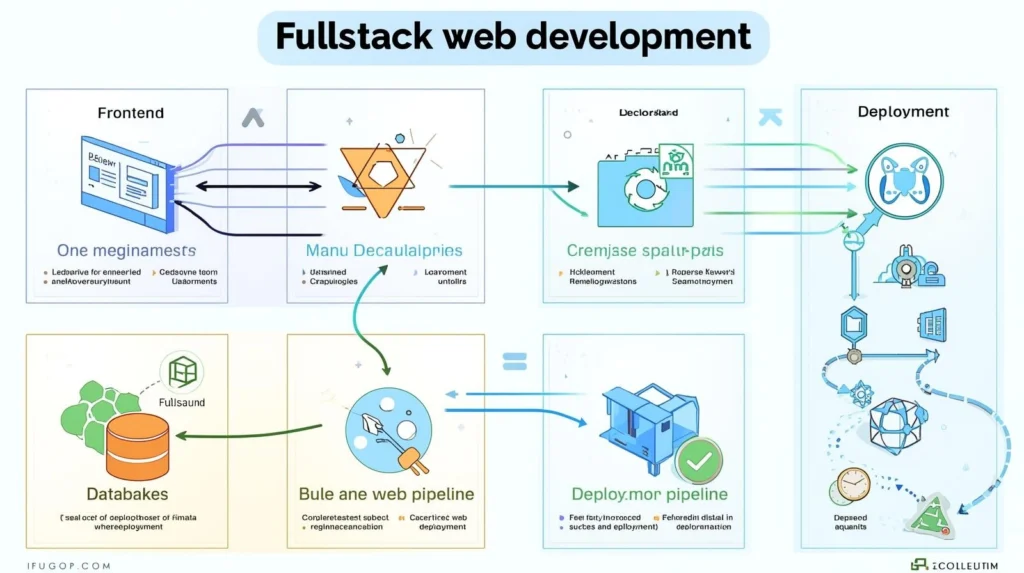
The process of fullstack development begins with planning and design, moves through development and deployment, and ends with maintenance. Here’s how a fullstack developer typically handles the process:
- Designing the User Experience: A fullstack developer starts by creating wireframes or prototypes for the user interface (UI) and user experience (UX). Tools like Figma and Adobe XD are commonly used for this phase.
- Frontend Development: Using HTML, CSS, and JavaScript, the developer builds the website’s frontend, ensuring it’s mobile-responsive and user-friendly.
- Backend Development: Next, the backend is built to support the frontend. This involves creating a server using Node.js or Python, setting up databases, and ensuring smooth communication between the server and the frontend.
- Integration and Testing: Fullstack developers test the entire system for bugs, security issues, and performance problems. Automated testing tools like Jest and Mocha are commonly used.
- Deployment: Once everything is working seamlessly, the fullstack developer deploys the application to a live environment. This might involve using cloud services like AWS or Heroku for hosting the application.
Pro Tip: Fullstack developers must keep an eye on both the user experience and server performance to ensure that the entire system runs smoothly.
What Are the Benefits of Hiring a Fullstack Developer?
Cost Efficiency
Hiring a fullstack web developer can be more cost-effective for businesses, especially startups and small businesses, as they can handle both frontend and backend development. This eliminates the need to hire separate frontend and backend developers, saving you money.
Faster Development Time
A fullstack developer can work on both aspects of the development process, ensuring faster turnaround times. Since they manage the entire project, they can troubleshoot issues quickly and ensure both frontend and backend components integrate seamlessly.
Versatility and Flexibility
Fullstack developers can switch between different tasks easily, which is particularly helpful when a project is in flux or needs adjustments on the fly. Their versatility makes them an essential asset for dynamic development teams.
When Should You Hire a Fullstack Web Developer?
Small to Medium Enterprises (SMEs) and Startups
If you’re running a small business or a startup, a fullstack developer is a great fit. They can help you build your website from the ground up, ensuring that all elements work together without the need for multiple specialists.
Example: A WordPress web developer can help you get a simple, effective website up and running, but a fullstack developer will offer you more flexibility if you need custom features or advanced integration.
Scaling Up Your Business
When your business starts growing and you need to scale your web presence, a fullstack developer can help you transition from a basic website to a more robust, feature-rich platform.
Pro Tip: Look for a fullstack developer with experience in eCommerce website development if you plan to add an online store to your website.
What Are the Challenges Faced by Fullstack Developers?
Keeping Up with Rapid Technological Changes
The world of web development is fast-paced, and fullstack developers must continually update their skills. From new frameworks to updated best practices, there’s always something new to learn.
Debugging and Maintenance
Managing both frontend and backend systems can sometimes result in bugs that span multiple parts of the application. Fullstack developers need to be skilled in debugging and maintaining all areas of the application.
Conclusion
Fullstack web development is a powerful skill set that blends frontend and backend expertise into one cohesive package. Whether you’re a business owner in the USA or Pakistan, understanding the value of a fullstack developer can help you build more efficient, scalable, and cost-effective digital solutions.
To get started, consider hiring a fullstack developer who can seamlessly integrate WordPress and eCommerce platforms, or opt for someone experienced in the latest backend technologies. Whatever your needs, fullstack developers offer a versatile solution for businesses looking to thrive in the digital landscape.
FAQ Section
1. What is the difference between frontend and backend in fullstack development?
The frontend is the part of the website that users interact with, while the backend handles the data processing, storage, and business logic.
2. Can a fullstack developer work on WordPress websites?
Yes, fullstack developers can work on WordPress sites, especially when custom themes or advanced features are required.
3. How long does it take to become a fullstack developer?
It typically takes about 1-2 years of dedicated learning and practice to become proficient in fullstack development.
4. Why should I hire a fullstack developer for my eCommerce website?
A fullstack developer can handle both the frontend design and backend integration for a smoother, more efficient eCommerce website development process.
5. Are fullstack developers expensive to hire?
While hiring a fullstack developer can be cost-effective in the long run, the salary can vary depending on experience, location, and expertise.
6. Can fullstack developers help with scaling a website?
Yes, fullstack developers can assist in scaling your website by optimizing both frontend and backend elements for better performance and user experience.
7. How do fullstack developers keep up with new technologies?
Fullstack developers stay updated by attending workshops, taking online courses, and experimenting with new frameworks and tools.