Have you ever visited an online store and instantly decided to leave because the website was difficult to navigate or lacked essential features? You’re not alone—poor user experience (UX) is one of the biggest reasons for high bounce rates and abandoned carts. According to a report by Baymard Institute, almost 70% of online shopping carts are abandoned, often due to factors like complicated checkout processes or lack of trust signals.
The good news is, you can avoid these pitfalls by incorporating the right features into your eCommerce website. In this blog post, we’ll dive into the top 5 essential eCommerce website features that can help you boost sales, enhance user experience, and ultimately convert more visitors into loyal customers.
By the end of this article, you’ll have a clear understanding of how to optimize your site and start driving more revenue immediately.
1. How Does a Seamless User Experience (UX) Influence Sales?
Why User Experience is Key to Boosting Conversion Rates
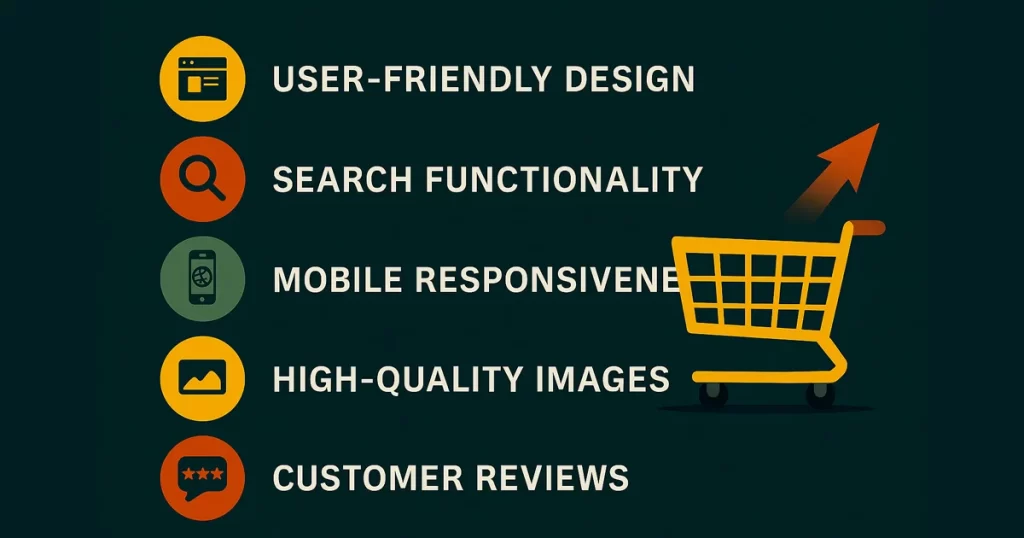
When it comes to eCommerce, first impressions matter. If customers have a frustrating or confusing experience on your website, they’re likely to leave without completing a purchase. A clean, intuitive, and responsive design is essential to keep visitors engaged.
For instance, Amazon’s massive success isn’t just because of the products they offer—it’s because of their user-friendly interface. Every aspect of the website is optimized for quick navigation, with features like personalized product recommendations, easy search options, and a clutter-free checkout.
Research shows that a website with a smooth UX design can increase conversions by as much as 400%. Simple elements like faster loading speeds, intuitive navigation, and responsive mobile design can make a huge difference.
Pro Tip: Ensure that your website loads within 3 seconds. Every additional second can cause a 7% reduction in conversions.
Key UX Elements to Focus On:
- Intuitive navigation: Ensure that your menu is organized, and products are easy to find.
- Fast load times: Aim for a website that loads quickly, especially on mobile devices.
- Responsive design: Optimize your store for all screen sizes, especially as mobile commerce continues to grow.
2. How Can Product Recommendations Drive More Sales?
Why Personalized Recommendations Matter
When it comes to eCommerce, personalization is powerful. A feature that showcases related products, recently viewed items, and personalized suggestions based on user behavior can lead to higher sales and better customer retention.
Amazon’s recommendation engine, for example, generates nearly 35% of its total sales through product recommendations. By analyzing customer browsing and purchase history, they tailor product suggestions, encouraging customers to spend more.
Real-world Example:
- Example: A fashion retailer integrates a product recommendation engine that suggests outfits based on customers’ past purchases, increasing the likelihood of upsells.
Pro Tip: Consider integrating tools like Shopify’s Product Recommendations or Dynamic Yield to automatically generate personalized suggestions for your customers. This not only boosts sales but also enhances customer satisfaction by providing a tailored shopping experience.
3. Why Is an Optimized Checkout Process Critical for Sales?
Reducing Cart Abandonment with a Simplified Checkout
One of the main reasons for cart abandonment is a complicated or lengthy checkout process. A study by Baymard Institute found that 21% of users abandon their cart because the checkout process is too long or complicated.
Here are the steps you can take to streamline your checkout process and reduce abandonment:
- Guest Checkout: Allow users to purchase without creating an account. Forcing users to sign up before making a purchase can be a huge deterrent.
- Multiple Payment Options: Offer a variety of payment methods like credit/debit cards, PayPal, mobile wallets (JazzCash, Easypaisa), and COD (Cash on Delivery), which is especially popular in Pakistan.
- Progress Indicators: Show customers how far they are in the checkout process and how many steps are left.
- Clear Call to Action: Make the “Buy Now” or “Proceed to Payment” button prominent and easily accessible.
Real-world Example:
- Case Study: Warby Parker, an eyewear brand, simplified its checkout process by offering free returns, multiple payment options, and guest checkout, resulting in a 30% increase in conversions.
Pro Tip: Ensure your checkout page is mobile-friendly and fully optimized. A mobile-first approach can reduce cart abandonment significantly, especially in markets like Pakistan where mobile usage is dominant.
4. How Can Trust Signals Increase Sales?
Building Trust with Security Features and Reviews
For an online store to thrive, you need to establish trust with potential buyers. Trust signals such as security badges, customer reviews, and money-back guarantees can reassure shoppers that they’re dealing with a credible business.
Trust Signals You Need:
- SSL certificates: Ensure your site has an SSL certificate so that customer data is securely encrypted during transactions.
- Customer Reviews: User-generated content like product reviews or ratings can significantly boost conversions. According to BrightLocal, 91% of customers read online reviews before making a purchase decision.
- Trust Badges: Display payment security badges (such as Visa, MasterCard, PayPal) on your checkout page to signal a safe shopping environment.
Real-world Example:
- Example: Zalora, a leading fashion retailer, prominently displays customer ratings and reviews, building credibility and boosting customer confidence.
Pro Tip: Actively encourage satisfied customers to leave positive reviews. You can use platforms like Yotpo or Trustpilot to collect authentic reviews that will instill trust in new visitors.
5. How Do Advanced Search and Filters Enhance User Experience?
The Power of Advanced Search and Filters
The ability to quickly find the right product is crucial in an eCommerce setting. A well-implemented search function and filtering options can help customers zero in on what they need, reducing frustration and speeding up the buying process.
Advanced search options should include:
- Auto-suggestions: Help customers find products quickly as they type.
- Filters by category, price, size, color: Let users narrow down results according to their preferences, especially for stores with large inventories.
- Sorting options: Allow users to sort results by relevance, price, and ratings, making it easier to compare products.
Real-world Example:
- Example: Daraz Pakistan offers multiple filtering options (price range, brands, ratings) that help customers find exactly what they’re looking for, making the shopping experience much faster and efficient.
Pro Tip: Invest in tools like Algolia for a fast, intuitive search experience. Advanced filtering features improve navigation and enhance customer satisfaction.
Conclusion
Integrating the right eCommerce website features is essential for boosting sales and growing your business. By focusing on seamless UX, personalized recommendations, a simplified checkout process, trust signals, and advanced search options, you’ll create a website that not only attracts customers but converts them into loyal buyers.
As eCommerce continues to grow, staying ahead of the competition means constantly optimizing and improving your site. Implementing these features will help you provide a better shopping experience, increase conversion rates, and ultimately, boost your bottom line.
Next steps: Evaluate your website and identify areas for improvement. Start with the most impactful features—such as optimizing your checkout process or adding trust signals—and gradually enhance other areas.
FAQ Section
- How can I improve my eCommerce website’s user experience?
Improving UX requires clean design, intuitive navigation, and fast loading times. Additionally, mobile optimization is crucial, as many users shop on mobile devices. - How do product recommendations boost sales?
Product recommendations personalize the shopping experience by showing customers relevant products based on their browsing or purchase history. This increases the chances of cross-selling and upselling. - Why is simplifying the checkout process important?
A simplified checkout process reduces cart abandonment. Features like guest checkout, multiple payment options, and a progress indicator can streamline the process and improve conversions. - How do trust signals affect online sales?
Trust signals, such as SSL certificates, customer reviews, and payment security badges, reassure customers that your store is legitimate and their personal information is safe. - How do advanced search features improve user experience?
Advanced search features, like auto-suggestions and filters, make it easier for customers to find products quickly. This enhances user experience and speeds up the purchase decision process. - What are the best payment methods for Pakistani eCommerce stores?
Popular payment methods in Pakistan include JazzCash, Easypaisa, PayPal (via third-party services), and COD (Cash on Delivery). Offering a variety of payment methods will cater to different customer preferences. - How can I use customer reviews to boost sales?
Display customer reviews prominently on product pages to build trust and influence purchase decisions. Positive reviews act as social proof, convincing new customers of the product’s quality.