Do you dream of launching your own online store in Pakistan but don’t know where to begin? You’re not alone. The eCommerce market in Pakistan is booming, with more businesses shifting to digital platforms, and the demand for online shopping growing exponentially. According to recent data, Pakistan’s eCommerce industry is expected to exceed $7 billion by 2026. However, starting an online store can feel like a daunting task—especially if you lack the expertise or technical knowledge.
This comprehensive guide is here to help you navigate the essential steps to launch a successful online store in Pakistan in 2026. Whether you are a first-time entrepreneur or a seasoned business owner, you’ll gain a clear roadmap and actionable tips for setting up your store, driving traffic, and maximizing sales.
1. Why Start an Online Store in Pakistan?
What Makes Pakistan’s eCommerce Market Attractive?
Pakistan’s online retail sector is growing at an unprecedented rate. According to research by Statista, Pakistan’s eCommerce revenue is set to rise by over 10% annually, creating a lucrative opportunity for entrepreneurs. Factors like the growing internet penetration (currently 112 million internet users), a young and tech-savvy population, and the increasing acceptance of digital payments make Pakistan an ideal location for launching an online business.
In addition, platforms like Daraz, the leading eCommerce marketplace in the country, and Facebook’s shopping feature have paved the way for local businesses to reach a wider audience. The time has never been better to tap into this market.
Pro Tip: Leverage the growing trend of mobile shopping. As of 2024, over 70% of eCommerce transactions in Pakistan are conducted via mobile devices.
2. What Business Model Should You Choose?
Selecting the Right Business Model for Your Store
The first step in launching an online store is deciding what type of business model suits your goals. Here are three popular models in Pakistan’s eCommerce landscape:
- B2C (Business-to-Consumer): This is the most common model where businesses sell products directly to consumers through their online store.
- C2C (Consumer-to-Consumer): Platforms like OLX or Facebook Marketplace allow users to sell products directly to other consumers. If you’re considering this route, it’s easier to start, but the competition can be fierce.
- B2B (Business-to-Business): If you plan to sell in bulk to other businesses, this model might be ideal. Some businesses use online stores to sell products to wholesalers or retailers.
Your choice should depend on the target market and the nature of your products.
Pro Tip: Starting with a B2C model allows you to directly interact with customers and build brand loyalty, especially if you’re in fashion, beauty, or electronics.
3. How to Choose the Right Platform for Your Online Store?
WooCommerce vs Shopify vs Local Platforms
When launching an online store, selecting the right platform is crucial. Here are some options:
- WooCommerce (for WordPress): Ideal if you want complete control over your store and are comfortable managing hosting, security, and other technical aspects. WooCommerce is free, but you’ll need to invest in hosting and plugins.
- Shopify: A hosted solution that is easy to use with minimal technical knowledge required. It’s a great option if you want everything managed for you, but it comes with a monthly fee.
- Local Platforms: Platforms like Tend, Shopistan, and PakSaaS are specifically tailored for Pakistani businesses. They offer local payment gateways and delivery integrations, which may save time and make the process smoother for local entrepreneurs.
Pro Tip: If you’re starting with a small budget, consider WooCommerce with a local hosting provider. However, if you prioritize ease of use and scalability, Shopify may be a better fit.
4. How to Set Up Payment Gateways for Your Online Store?
Enabling Secure and Localized Payment Methods
Setting up a reliable payment gateway is crucial to ensure seamless transactions for your customers. In Pakistan, popular options include:
- JazzCash: One of Pakistan’s largest mobile wallets, offering easy integration for online payments.
- EasyPaisa: Another mobile payment option that integrates with local banks.
- Bank Transfers: For businesses that prefer offline transactions, offering direct bank transfers can be a safe, albeit slower, option.
- PayPal: While not widely supported in Pakistan, some international businesses use third-party services to accept PayPal payments.
Integrating these local payment solutions makes it easier for Pakistani customers to pay for products through familiar channels, improving conversion rates.
Pro Tip: Offer multiple payment methods to cater to different customer preferences. JazzCash and EasyPaisa are highly popular for mobile-based transactions in Pakistan.
5. How to Optimize Your Online Store for Pakistani Customers?
Localizing Your Online Store
To build a strong connection with Pakistani customers, you must localize your store. This involves:
- Local Currency and Language: Set your store to display prices in Pakistani Rupees (PKR) and offer an Urdu language option. This helps attract customers who prefer shopping in their local language.
- Responsive Design: Ensure your online store is mobile-friendly, as a significant portion of online shopping in Pakistan happens via smartphones.
- Local Delivery Services: Pakistan’s delivery ecosystem includes services like TCS, Leopards Courier, and Pakistan Post. Integrating these services with your store helps streamline the delivery process.
Pro Tip: Partner with a local logistics provider to ensure timely deliveries across urban and rural areas, which can help in building customer trust.
6. What Are the Legal Requirements for Launching an Online Store in Pakistan?
Ensuring Compliance with Local Regulations
To launch your online store in Pakistan, ensure you meet the following legal requirements:
- Business Registration: Register your business with the Securities and Exchange Commission of Pakistan (SECP) or the Federal Board of Revenue (FBR) for tax purposes.
- Taxation: Register for a National Tax Number (NTN) and comply with Pakistan’s Goods and Services Tax (GST) regulations, if applicable.
- E-commerce Policy: Familiarize yourself with Pakistan’s E-commerce Policy 2020, which offers guidelines for consumer protection, payment security, and dispute resolution.
Consult a legal expert to ensure your store adheres to all legal requirements, avoiding potential fines or legal issues.
Pro Tip: It’s important to include clear terms and conditions, privacy policies, and return policies on your website to comply with local consumer protection laws.
7. How to Market Your Online Store in Pakistan?
Driving Traffic and Increasing Sales
Once your store is set up, it’s time to attract customers. Here are some proven strategies for marketing your online store in Pakistan:
- Social Media Marketing: Platforms like Facebook, Instagram, and TikTok have a huge user base in Pakistan. Use these platforms for targeted ads and influencer marketing.
- Search Engine Optimization (SEO): Optimize your website with local keywords and long-tail keywords to improve organic search rankings.
- Email Marketing: Collect customer emails and send personalized promotions, new arrivals, and offers to increase repeat business.
- Google Ads: Paid advertising through Google can help target potential customers who are searching for products similar to yours.
Pro Tip: Use Facebook ads to target specific demographics based on interests, income level, and location in Pakistan. With a small budget, you can reach thousands of potential customers.
Conclusion
Launching an online store in Pakistan requires strategic planning, understanding of local preferences, and knowledge of the right tools and platforms. By following the steps outlined in this guide, you can set up your store, ensure a seamless shopping experience, and market your products effectively to a growing customer base.
To succeed, focus on providing exceptional customer service, streamlining your logistics, and keeping your customers’ needs at the forefront of your business strategy. Now is the perfect time to tap into the vast opportunities offered by Pakistan’s eCommerce market.
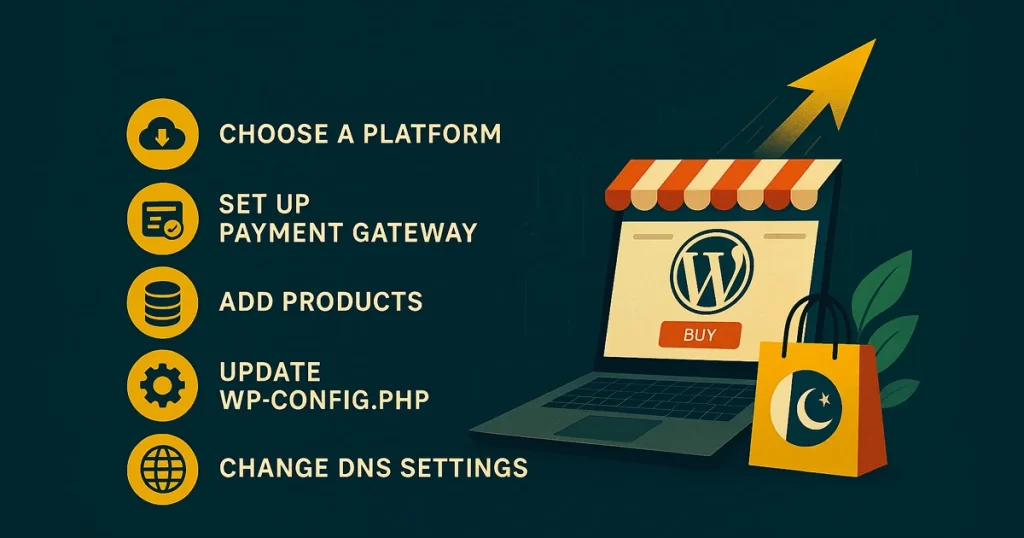
Next steps: Start by selecting the right platform and setting up your payment gateways. Then, focus on optimizing your website for mobile users and localizing your content for the best customer experience.
FAQ Section
- What is the best platform for launching an online store in Pakistan?
The best platform depends on your budget and technical skills. WooCommerce is affordable and customizable, while Shopify is easy to use but comes with a monthly fee. Local platforms like Tend also provide tailored solutions. - How can I accept payments on my online store in Pakistan?
You can use mobile wallets like JazzCash and EasyPaisa, as well as traditional bank transfers. For international payments, you can integrate PayPal through third-party services. - Is it necessary to register my business before launching an online store in Pakistan?
Yes, you need to register your business with the SECP or FBR to ensure compliance with local tax laws and eCommerce regulations. - How can I market my online store in Pakistan?
Focus on social media marketing, especially Facebook and Instagram ads. You can also optimize your site for SEO and use email marketing to keep customers engaged. - What are the key challenges when launching an online store in Pakistan?
The key challenges include finding reliable payment gateways, managing logistics and deliveries, and ensuring compliance with local laws. However, the market potential outweighs these challenges. - How much does it cost to launch an online store in Pakistan?
The cost varies depending on the platform, design, and features you choose. You can expect to pay for web hosting, payment gateways, and marketing. For a basic store, the initial cost could range from PKR 20,000 to PKR 100,000 or more. - What should I keep in mind when choosing a shipping partner in Pakistan?
Look for a reliable logistics partner that offers timely deliveries and reasonable rates. Popular choices in Pakistan include TCS and Leopards Courier, both of which provide excellent nationwide coverage.