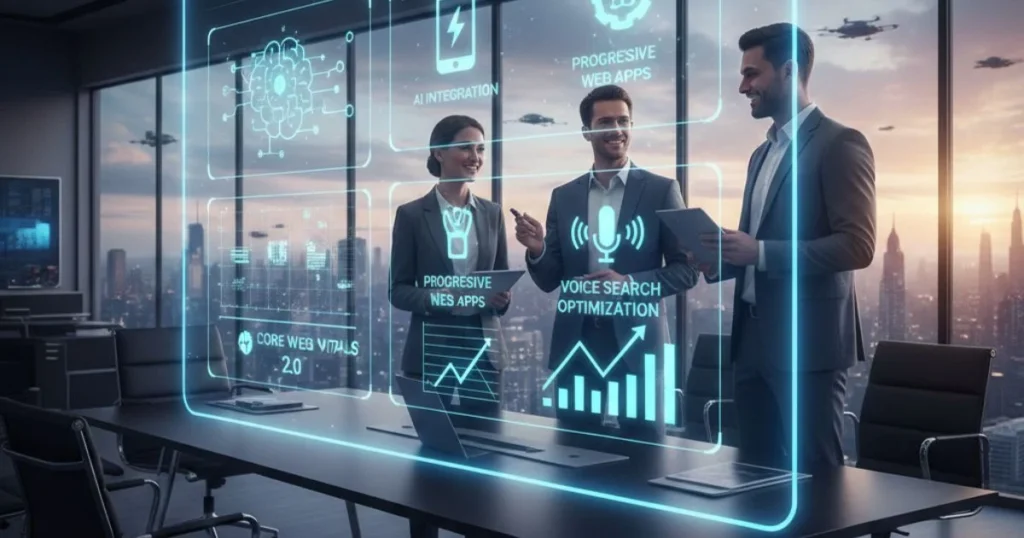
Are you prepared for the upcoming Development Trends in 2026? If you’re a business owner or marketing manager, staying ahead of the curve is crucial to maintaining a competitive edge in an increasingly digital-first economy. As technology evolves rapidly, so do the tools, frameworks, and strategies behind successful websites. However, with so many options available—from serverless architecture to immersive AI environments—it can be overwhelming to know where to focus your resources. What if you could pinpoint the key trends shaping web development right now and harness them to propel your business forward?
In 2026, the digital landscape is no longer just about having an online presence; it’s about creating a dynamic, intelligent, and hyper-personalized ecosystem. In this post, we’ll explore the most significant Development Trends in 2026, focusing on the innovations that can help you create better user experiences, optimize your website for SEO, and drive more conversions. Whether you’re looking to improve your website design and development or seeking the best web development services, you’ll find actionable insights and real-world examples that you can implement immediately to scale your brand.
1. The Role of Artificial Intelligence (AI) in Web Development
Why AI is Crucial for Modern Development Trends
Artificial intelligence is transforming how websites are built, designed, and maintained. In 2026, AI is no longer just a buzzword—it’s a powerful tool for web developers, business owners, and marketers alike. AI-powered tools can automate time-consuming tasks like code debugging, personalize user experiences through predictive modeling, and even improve search engine optimization (SEO) by analyzing real-time search intent.
One of the key benefits of AI in web development is its ability to enhance user experience (UX) through personalized content and smart recommendations. In 2026, we are seeing the rise of “Generative UI,” where a website’s interface can actually change its layout based on the individual user’s preferences and past interactions. AI algorithms analyze user behavior and tailor website content in real-time, keeping visitors engaged and significantly increasing the likelihood of conversion.
Example: The e-commerce giant, Amazon, uses AI to suggest products based on browsing history and user preferences. In 2026, this has evolved into “Agentic AI,” where the website doesn’t just suggest but can proactively assist the user in completing complex purchases.
Pro Tip: Implement AI-driven chatbots on your website to provide instant customer support. Modern AI assistants can now handle complex queries, reducing bounce rates and increasing customer satisfaction without human intervention.
How to Leverage AI for Your Website Development
-
AI-Powered Content Creation: Use AI tools to generate high-quality, SEO-optimized content for your website, blogs, and social media.
-
Personalization Engines: Integrate AI-driven algorithms to deliver tailored experiences for your visitors.
-
Predictive Analytics: Utilize AI to forecast customer behavior and optimize your website’s conversion funnel.
-
Automated Testing: Use AI to scan for bugs and performance bottlenecks before your site goes live.
2. Voice Search Optimization: The Next SEO Frontier
Why Voice Search Will Dominate in 2026
Voice search has rapidly gained traction, and it’s poised to be a dominant force in the web development landscape by 2026. With the proliferation of voice-activated devices like Amazon Echo, Google Home, and advanced AI smartphones, users are increasingly relying on natural language commands to search for information online.
Websites that aren’t optimized for voice search risk missing out on a significant amount of organic traffic. Voice search queries tend to be longer and more conversational than text-based searches, so optimizing for natural language is crucial. In 2026, the focus has shifted from “keywords” to “entities” and “intent.”
Statistics: According to a report by Statista, by 2026, more than 55% of all searches will be voice-based. This means that businesses that ignore voice search will fall behind in rankings and visibility.
Pro Tip: Focus on long-tail keywords and natural phrases that people would use when speaking. Integrating conversational language into your website’s content will improve your chances of ranking for voice search queries and capturing “Position Zero” in search results.
How to Optimize Your Website for Voice Search
-
Focus on Local SEO: Many voice searches are location-based (e.g., “Web developers near me”). Ensure your business is listed on Google My Business and include location-specific keywords.
-
Use Structured Data Markup: Implement schema markup (JSON-LD) to help search engines better understand the context and hierarchy of your content.
-
Create FAQ Pages: Answer common questions on your website in a natural, conversational tone, as these types of questions are often used in voice searches.
-
Optimize for Speed: Voice assistants prioritize fast-loading websites to give users instant answers.
3. Progressive Web Apps (PWAs) Are the Future
Why PWAs Are Taking Over Mobile Web Development
Progressive Web Apps (PWAs) are transforming the way users interact with websites. PWAs combine the best features of both websites and mobile apps, offering a native app-like experience through a web browser. With faster load times, offline functionality, and push notifications, PWAs are becoming a go-to choice for businesses seeking to enhance mobile user experiences without the expense of developing a full-fledged mobile app for different operating systems.
Example: Starbucks’ PWA allows users to order and pay online even when they don’t have an internet connection, providing a seamless experience for customers on the go.
Pro Tip: Switch to a PWA if you’re looking to improve mobile user engagement. PWAs can significantly improve load times (Core Web Vitals), resulting in higher customer satisfaction and improved SEO rankings in 2026.
How PWAs Can Enhance Your Website Development
-
Faster Load Times: PWAs cache content, allowing it to load almost instantly, even on slower 3G or 4G networks.
-
App-like Experience: Features like push notifications, full-screen mode, and home screen installation without the need for an app store.
-
Improved Conversion Rates: Higher reliability and offline capabilities lead to a 20% average increase in conversions compared to standard mobile sites.
-
Lower Development Costs: You only need to build one app that works across all devices, saving time and money.
4. Low-Code and No-Code Development: Democratizing the Web
Why Low-Code is a Game-Changer in 2026
Low-code and no-code development platforms have gained significant traction, and by 2026, they’re expected to become an essential part of the business tech stack. These platforms allow non-technical users to create and manage websites with little to no coding knowledge, making digital growth accessible to small business owners, entrepreneurs, and startups.
Low-code/no-code platforms are especially useful for creating simple websites or landing pages without the need for a full development team. However, they also offer robust features that can scale as businesses grow.
Statistics: A report by Gartner predicts that by 2026, 75% of all new application development will be done using low-code/no-code platforms.
Pro Tip: If you’re a business owner on a tight budget, consider using a low-code platform for building prototypes or internal tools. This can save you time and money while giving you the flexibility to pivot quickly based on market feedback.
How to Leverage Low-Code and No-Code Platforms
-
Website Builders: Use platforms like Wix, Webflow, or Shopify to build and maintain your website with ease.
-
Automate Workflows: Use tools like Zapier to automate repetitive tasks and connect your web apps seamlessly.
-
Quick Prototyping: Build functional prototypes quickly to test your ideas and gather feedback from customers before committing to a full-scale development project.
-
Empower Internal Teams: Allow marketing teams to update landing pages without waiting for the IT department.
While low-code platforms offer speed and ease, they often lack the deep flexibility of a tailor-made solution. For a truly unique brand identity and superior performance, understanding why custom websites are still better than templates in 2026 is essential for long-term scalability.
5. Cybersecurity: An Ongoing Priority
Why Security Must Be a Top Concern in 2026
As cyber threats become more sophisticated, cybersecurity is no longer a luxury—it’s a necessity. In 2026, businesses must prioritize securing their websites to protect user data, maintain trust, and avoid costly breaches. With the rise of AI-driven phishing attacks and data theft, web developers must integrate robust security measures into every phase of website development.
Example: In 2024, a major data breach at a popular e-commerce platform led to the exposure of millions of customers’ personal data. This breach resulted in significant financial loss and damage to the company’s reputation.
Pro Tip: Ensure your website is protected by SSL/TLS encryption, regularly update your CMS, and conduct monthly vulnerability assessments to identify potential security gaps.
How to Secure Your Website Development
-
Use SSL/TLS Encryption: Ensure your website uses HTTPS to encrypt sensitive data transmitted between the user and your server.
-
Regular Security Audits: Conduct regular vulnerability assessments to identify and fix any security issues before they are exploited.
-
Multi-Factor Authentication (MFA): Add an extra layer of security by requiring users and admins to authenticate their identity through multiple channels.
-
Data Backups: Regularly back up your website data to ensure quick recovery in case of an attack.
6. Emerging Technologies: WebAssembly and Motion UI
Beyond the major shifts, 2026 is seeing the rise of WebAssembly (Wasm), which allows complex software to run in the browser at near-native speed. This is crucial for businesses offering online editing tools or data-heavy visualizations. Additionally, Motion UI is becoming a standard for enhancing user engagement through subtle animations that guide the user journey without slowing down the page.
7. Sustainable and Green Web Development
In 2026, “Digital Sustainability” has become a major factor for CEOs and Business Owners. Sustainable web development involves optimizing code, using green hosting, and reducing server energy consumption. Not only is this good for the planet, but “Greener” websites tend to load faster and rank better in Google’s eco-conscious algorithms.
Conclusion
As we move through 2026, web development continues to evolve at a breakneck pace. By staying on top of emerging Development Trends like AI integration, voice search optimization, PWAs, and cybersecurity, you can ensure your website remains competitive and meets the ever-changing expectations of your customers.
Whether you’re looking to improve your website’s user experience, boost SEO rankings, or enhance security, these trends provide practical, actionable solutions to help you achieve your goals. Take the time to invest in these technologies now, and you’ll reap the benefits of a robust, future-proof digital presence for years to come. In 2026, being “online” isn’t enough—you must be intelligent, fast, and secure.
Call to Action: Ready to take your website development to the next level? Contact our expert web development company today to get started on your 2026 digital strategy!
FAQ Section
1. What is the best way to optimize my website for voice search? To optimize for voice search, focus on natural language keywords and long-tail phrases. Answer common questions directly on your website, and ensure your content is mobile-friendly. Use structured data markup to help search engines understand your content better.
2. How can AI improve my website development? AI can personalize user experiences, automate content creation, and improve SEO efforts. Tools like chatbots can provide instant customer support, while AI-powered analytics can offer valuable insights into user behavior.
3. Are PWAs better than mobile apps for my business? PWAs offer a native app-like experience without the need for app store installation. They provide faster load times, offline functionality, and push notifications, making them a cost-effective alternative to traditional mobile apps for most businesses.
4. How secure should my website be in 2026? Cybersecurity should be a top priority. Use SSL encryption, conduct regular security audits, and implement multi-factor authentication to protect user data and maintain trust with your customers in a world of AI-driven threats.
5. Can low-code platforms be used for complex websites? Low-code platforms are ideal for simple websites or landing pages. However, they can also support more complex functionality if integrated with advanced features, custom APIs, or third-party backend services.
6. What is the future of web development in 2026? The future of web development includes a greater focus on AI, automation, voice search, and improved security. Progressive web apps, low-code/no-code development, and personalized experiences will continue to drive the industry forward.