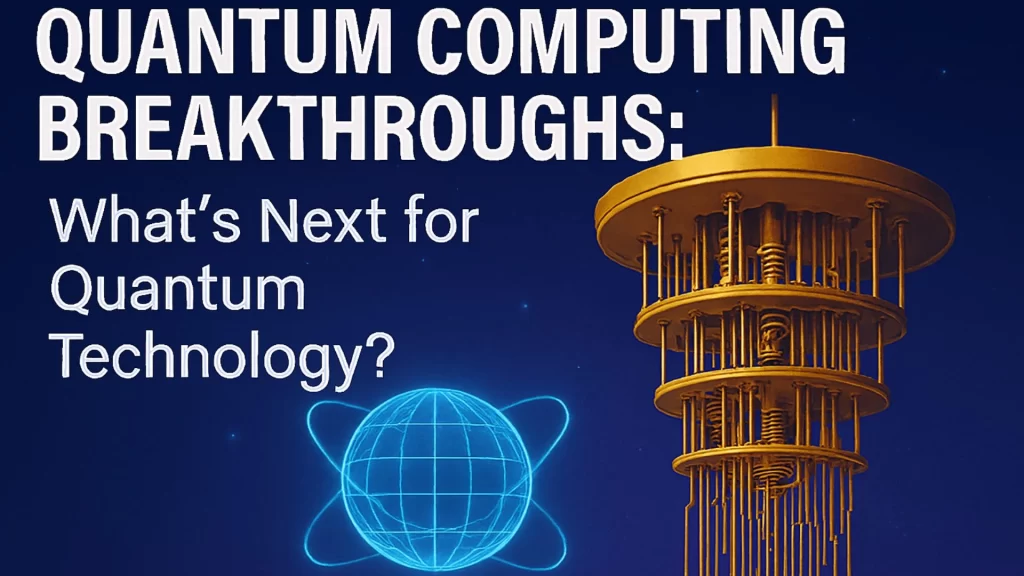
Have you ever wondered how quantum computing will change the world? With rapid advancements in quantum technology, we’re on the cusp of a new era in computing. But what does the future hold for this groundbreaking field? What are the latest breakthroughs, and how will they shape the world of quantum technology? Let’s dive into these questions and explore the exciting possibilities of the future of quantum computing.
Professional Website Development & SEO Services – Grow Online Fast
What Exactly is Quantum Computing?
At its core, quantum computing is an entirely new approach to processing information. Unlike classical computers, which use bits as the smallest unit of data (either 0 or 1), quantum computers leverage quantum bits, or qubits. These qubits have the unique ability to exist in multiple states simultaneously due to the principles of quantum mechanics, specifically superposition and entanglement.
While classical computers work linearly, processing one operation at a time, quantum computers can process multiple possibilities simultaneously, drastically increasing the potential for faster and more efficient computations. But the journey to harnessing the true power of quantum computing is just beginning, and with each new breakthrough, the future of quantum technology becomes clearer.
What Are the Latest Breakthroughs in Quantum Computing?
In the last few years, we’ve seen significant progress in the field of quantum computing. One of the most notable achievements is the development of quantum supremacy. In 2019, Google claimed to have achieved this milestone when its quantum computer solved a problem in 200 seconds that would have taken a supercomputer thousands of years. While this was a significant leap, it’s important to note that we’re still in the early stages of quantum computing.
One of the latest breakthroughs is the development of more stable and reliable qubits. In 2023, researchers from MIT and other top institutions created a qubit that is less prone to error, which is a crucial step towards making quantum computers practical for real-world applications. This stability is necessary for quantum computers to perform more complex tasks without the high error rates that have previously limited their capabilities.
How Will Quantum Computing Impact Industries?
The potential applications for quantum computing are vast and span numerous industries, from healthcare to finance to cybersecurity. One of the most promising fields for quantum technology is drug discovery. Quantum computers have the potential to simulate molecular structures and chemical reactions at an unprecedented level of detail, which could lead to faster development of life-saving medications.
In the financial sector, quantum computing could revolutionize risk analysis, portfolio optimization, and fraud detection. Algorithms that take hours or even days to process on classical computers could be completed in a fraction of the time, offering financial institutions a competitive edge.
Cybersecurity is another area where quantum advances could make a massive impact. With the advent of quantum computers, current encryption methods, which rely on the complexity of factoring large numbers, could become obsolete. Quantum-resistant encryption methods, such as lattice-based cryptography, are being developed to counteract this threat. This shift could lead to more secure systems, protecting sensitive information in an increasingly digital world.

What Are the Challenges of Quantum Computing?
While the promise of quantum computing is exciting, there are still several hurdles to overcome. One of the biggest challenges is qubit coherence. Qubits are delicate and highly susceptible to interference from their environment, leading to errors in calculations. Ensuring the stability of qubits for long enough to perform meaningful calculations is an ongoing research effort.
Another significant challenge is scaling quantum systems. Most quantum computers today have only a small number of qubits, and while researchers are making progress, scaling these systems to hundreds or thousands of qubits is no small feat. The complexity of quantum algorithms and the need for sophisticated error correction methods add to the difficulty of scaling.
Lastly, the cost of building and maintaining quantum computers remains prohibitively high. The technology requires highly controlled environments, such as extreme cooling systems, to keep qubits stable. Until quantum computing becomes more affordable, its widespread use in everyday applications will remain limited.
What Does the Future of Quantum Technology Look Like?
Looking ahead, the future of quantum computing is incredibly promising. One key area of focus is improving quantum error correction. Researchers are working to develop new algorithms and techniques to reduce the error rates of quantum computers, making them more reliable and practical for everyday use.
Another major development is the integration of quantum computing with classical systems. Hybrid systems, where quantum computers work alongside classical computers, will likely play a crucial role in accelerating the adoption of quantum technology. These systems could combine the best of both worlds, using quantum computers for specific tasks that require immense processing power, while relying on classical computers for other tasks.
In the next decade, we may also see quantum computing become more accessible to businesses and developers. Cloud-based quantum computing services are already emerging, allowing companies to access quantum computing power without needing to invest in expensive hardware. This democratization of quantum computing could accelerate innovation and lead to more practical applications across industries.
Will Quantum Computing Revolutionize Artificial Intelligence?
Quantum computing holds the potential to accelerate artificial intelligence (AI) in ways we’ve never seen before. AI algorithms rely heavily on processing large amounts of data and performing complex calculations. With quantum computers, AI systems could process vast datasets more efficiently and uncover insights that were previously impossible to achieve with classical computers.
One exciting area of research is quantum machine learning. Quantum computers could speed up training processes for machine learning models, leading to more powerful AI systems in fields like natural language processing, computer vision, and robotics. While this is still in the experimental phase, the integration of quantum computing and AI could bring about groundbreaking advances in how machines learn and think.
What Are the Potential Risks of Quantum Computing?
As with any disruptive technology, quantum computing comes with its risks. One of the primary concerns is the impact on cybersecurity. While quantum computers have the potential to enhance encryption, they also pose a threat to current encryption methods. The ability of quantum computers to break traditional cryptographic systems could make sensitive information vulnerable to cyberattacks.
Additionally, there are concerns about the ethical implications of quantum computing, particularly in fields like AI. As quantum systems become more powerful, there will be questions about how they should be used, who controls them, and how to ensure they’re used responsibly.
Conclusion: The Future of Quantum Computing is Bright
The future of quantum technology is filled with exciting possibilities. With breakthroughs happening at a rapid pace, we can expect quantum computing to revolutionize industries and solve problems that were previously thought to be unsolvable. From drug discovery to finance to cybersecurity, the applications for quantum technology are vast and transformative.
However, challenges remain. Quantum computing is still in its infancy, and there are significant obstacles to overcome, such as qubit stability, error correction, and scaling. But with continued investment in research and development, the next few decades will likely see quantum computing mature into a practical, everyday technology.
As we look ahead to the future of quantum, it’s clear that we’re on the brink of a technological revolution that could change the world in ways we can’t yet fully comprehend. Whether you’re a business leader, a developer, or just an enthusiast of cutting-edge technology, the future of quantum computing is one to watch closely.
FAQs about Quantum Computing Breakthroughs
1. What is quantum computing?
Quantum computing is a type of computing that uses quantum bits (qubits) instead of classical bits. Qubits can exist in multiple states simultaneously, allowing quantum computers to process information much faster than traditional computers.
2. How does quantum computing work?
Quantum computing leverages principles of quantum mechanics, such as superposition and entanglement, to perform computations. These properties allow quantum computers to explore multiple solutions simultaneously, greatly enhancing computational power.
3. What industries will benefit most from quantum computing?
Industries such as healthcare, finance, cybersecurity, and logistics will benefit greatly from quantum computing. Applications include drug discovery, risk analysis, portfolio optimization, and quantum-resistant encryption.
4. What are the challenges facing quantum computing?
The main challenges include qubit coherence, error correction, scaling quantum systems, and the high cost of maintaining quantum computers.
5. When will quantum computing be widely available?
While quantum computing is progressing rapidly, it may take a decade or more before quantum computers are widely available for practical use across various industries. Research and development are still ongoing to make quantum systems more stable and cost-effective.
6. Can quantum computers replace classical computers?
Quantum computers are not designed to replace classical computers but rather to complement them. They excel at solving specific types of problems that classical computers cannot handle efficiently, such as simulating molecular structures or optimizing complex systems.
7. How will quantum computing affect AI?
Quantum computing could significantly enhance AI by enabling faster data processing and more efficient algorithms, especially in fields like machine learning and natural language processing. Quantum machine learning holds the potential to revolutionize AI development