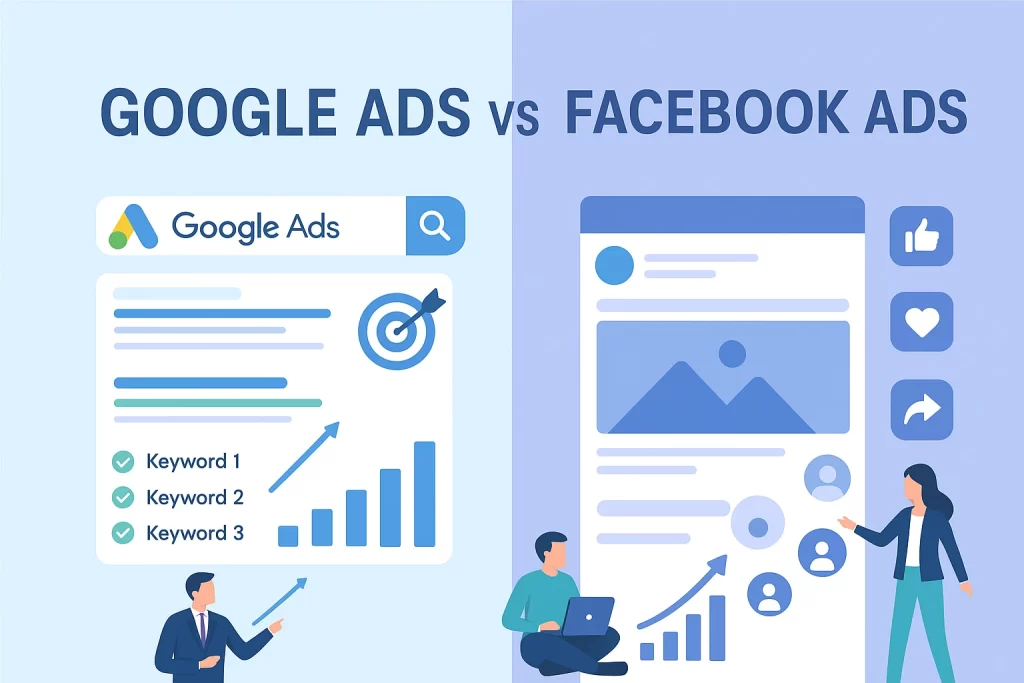
When it comes to digital advertising, business owners and marketing managers often find themselves at a crossroads: Google Ads vs Facebook Ads—which platform will provide the best return on investment (ROI)? If you’re feeling overwhelmed by the options, you’re not alone. Many entrepreneurs, startups, and marketing professionals grapple with this decision daily.
Imagine this: You’ve got a limited budget but want to drive traffic, generate leads, and ultimately boost sales. Do you turn to Google, where intent-driven search ads can capture high-conversion prospects, or Facebook, where eye-catching visuals and targeted ads reach users based on interests and behaviors?
In this post, we’ll break down both platforms and help you determine which is the right fit for your business. Whether you’re a seasoned marketer or a small business owner just getting started, this guide will provide the insights you need to make a well-informed decision.
Professional Website Development & SEO Services – Grow Online Fast
Google Ads vs Facebook Ads: Understanding the Basics
Before diving into the details, let’s define what each platform offers.
What Are Google Ads?
Google Ads (formerly Google AdWords) is a paid advertising platform that allows businesses to display ads across Google’s vast network. These ads can appear in search results, YouTube, Gmail, and millions of partner websites.
The primary advantage of Google Ads is that it targets users based on intent. When someone searches for something, they’re usually looking for an answer or solution right then and there. For example, if someone searches for “buy running shoes online,” they are highly likely to make a purchase.
What Are Facebook Ads?
Facebook Ads, on the other hand, allow businesses to run ads on Facebook, Instagram, Messenger, and the Audience Network. This platform focuses on behavioral targeting, reaching users based on their interests, demographics, online activity, and more.
Facebook ads are often used for awareness, engagement, or even remarketing to potential customers who have interacted with your brand in some way. The advantage here is that you can target people who may not even realize they need your product yet.
Which Platform Delivers Better ROI?
The most important question for business owners: Which platform will give you the best ROI?
Here’s a breakdown of both platforms’ strengths:
Google Ads: Capturing High-Intent Customers
Google Ads excels when it comes to targeting customers who are actively searching for products or services. The key here is intent. For example, if you’re a plumber, someone searching for “emergency plumber near me” is likely ready to hire, making them a high-value lead.
Pro Tip: Use Google’s keyword planner tool to target keywords with high search volume but relatively low competition. These keywords will help you get more bang for your buck.
Facebook Ads: Building Awareness and Engagement
Facebook Ads are a great way to reach a wide audience, especially if you’re targeting users who may not have immediate intent. With Facebook’s sophisticated targeting, you can show ads to users based on their demographics, interests, or behaviors, making it a fantastic tool for brand awareness and engagement.
For example, a company that sells home décor could use Facebook Ads to showcase its products to people interested in home improvement, even if they’re not actively searching for specific items.
Expert Insight: Facebook Ads often work well for top-of-funnel marketing—reaching people who are still in the research phase.
Which Platform is More Cost-Effective?
Google Ads: Pay Per Click (PPC) Model
With Google Ads, you pay for each click on your ad (PPC), meaning you’re charged when someone interacts with your ad. While this can be highly effective, it can also get expensive, especially in competitive industries. For instance, bidding on high-demand keywords like “insurance” or “mortgage” can cost upwards of $50 per click.
Pro Tip: Use long-tail keywords (more specific and less competitive) to reduce cost-per-click and improve ROI.
Facebook Ads: Pay Per Impression (CPM) or Click (CPC)
Facebook Ads can be less expensive, depending on the objective. For awareness campaigns, you might pay based on CPM (cost per 1,000 impressions). For engagement campaigns, it’s typically CPC. Overall, Facebook’s CPM is generally lower than Google’s CPC, making it more affordable for businesses on a tight budget.
Pro Tip: Split test your campaigns to see which one delivers better results for your business and optimize your budget accordingly.
Targeting Capabilities: A Deep Dive
Google Ads: The Power of Search Intent
Google Ads is an excellent platform for businesses that rely on intent-based marketing. If you’re targeting customers who are already searching for a solution, Google is the way to go. You can even refine targeting with advanced filters like geographic location, device type, or time of day.
Real-World Example: A local bakery running Google Ads for search terms like “best cupcakes near me” can capture potential customers who are ready to make a purchase.
Facebook Ads: Behavioral and Demographic Targeting
Facebook Ads allows you to target based on interests, behaviors, and demographics. This can be extremely powerful for brands that want to introduce their products to a wider audience. With Facebook’s vast data on user behavior, you can get very specific in who you’re targeting.
Real-World Example: A fitness brand could target users interested in health, fitness, and wellness on Facebook, even if they haven’t actively searched for workout gear yet.
Tracking and Analytics: Which Offers More Insights?
Google Ads: Advanced Analytics and Reporting
Google Ads provides detailed tracking for every campaign. You can track conversions, clicks, and even measure the performance of individual keywords. This helps you understand exactly which part of your campaign is driving ROI.
Pro Tip: Utilize Google Analytics alongside Google Ads to get deeper insights into customer behavior on your website.
Facebook Ads: Insights and Retargeting
Facebook provides robust analytics through Facebook Insights and Facebook Pixel. These tools let you track conversions, measure engagement, and even retarget users who have interacted with your ads or website.
Pro Tip: Make sure you install the Facebook Pixel on your website to track user behavior and improve retargeting efforts.
When Should You Choose Google Ads?
- You have a clear, defined customer intent.
- Your business relies on immediate conversions, like e-commerce, emergency services, or consulting.
- You are targeting high-value keywords that show intent to purchase or take action.
When Should You Choose Facebook Ads?
- You want to build awareness or reach a broad audience.
- Your business is at the top of the sales funnel, where customers aren’t actively searching yet.
- You have a visual product or service that benefits from eye-catching ads and engagement.
Conclusion
Both Google Ads and Facebook Ads offer unique benefits for businesses, but which one you should choose ultimately depends on your business goals and audience. If you’re looking to capture high-intent leads and drive immediate conversions, Google Ads is your best bet. However, if you want to build brand awareness, reach a broader audience, and engage with users, Facebook Ads may be the right choice.
Remember, it’s not always an either/or decision. Many successful businesses use both platforms to complement each other, using Google Ads for high-conversion keywords and Facebook Ads for awareness and engagement.
Call-to-Action: Want to learn more about optimizing your digital ad campaigns? Check out our advanced guide to Facebook and Google Ads or reach out to our expert marketing team for personalized advice.
FAQ Section
1. What is the key difference between Google Ads and Facebook Ads?
Google Ads targets users actively searching for products or services, while Facebook Ads targets users based on interests and behaviors.
2. Which platform is more cost-effective, Google Ads or Facebook Ads?
Facebook Ads typically offer lower costs, especially for awareness campaigns. Google Ads can be more expensive, particularly for competitive keywords.
3. Can I use both Google Ads and Facebook Ads together?
Yes, many businesses use both platforms together. Google Ads is great for high-intent conversions, while Facebook Ads excels at building awareness and engagement.
4. How do I track the success of my ads?
Both Google Ads and Facebook Ads provide advanced analytics. Google Ads tracks clicks and conversions, while Facebook Ads offers detailed insights and retargeting options.
5. Which platform should I choose for a local business?
For a local business, Google Ads is ideal if you want to capture high-intent searches like “plumbers near me” or “restaurants near me.” Facebook Ads can complement this for building local awareness.
6. Can I advertise on Instagram using Facebook Ads?
Yes, Instagram is integrated with Facebook Ads, allowing you to create and manage ads that will appear on Instagram as well as Facebook.
7. What types of businesses benefit more from Facebook Ads?
Facebook Ads are perfect for businesses in lifestyle, fashion, entertainment, or consumer goods where visual content plays a major role in attracting customers.