When it comes to building an ecommerce website, business owners are often faced with a tough decision: Shopify vs WordPress. With both platforms offering robust features for ecommerce, choosing the right one for your business can feel overwhelming. Should you opt for the ease of Shopify or the flexibility of WordPress?
This post will break down the key differences, pros, and cons of each, helping you make an informed decision for your ecommerce business. By the end, you’ll understand which platform suits your needs and how you can leverage either to build a successful online store.
What Are the Key Differences Between Shopify and WordPress for Ecommerce?
Before diving into the details, it’s important to grasp the fundamental differences between these two platforms.
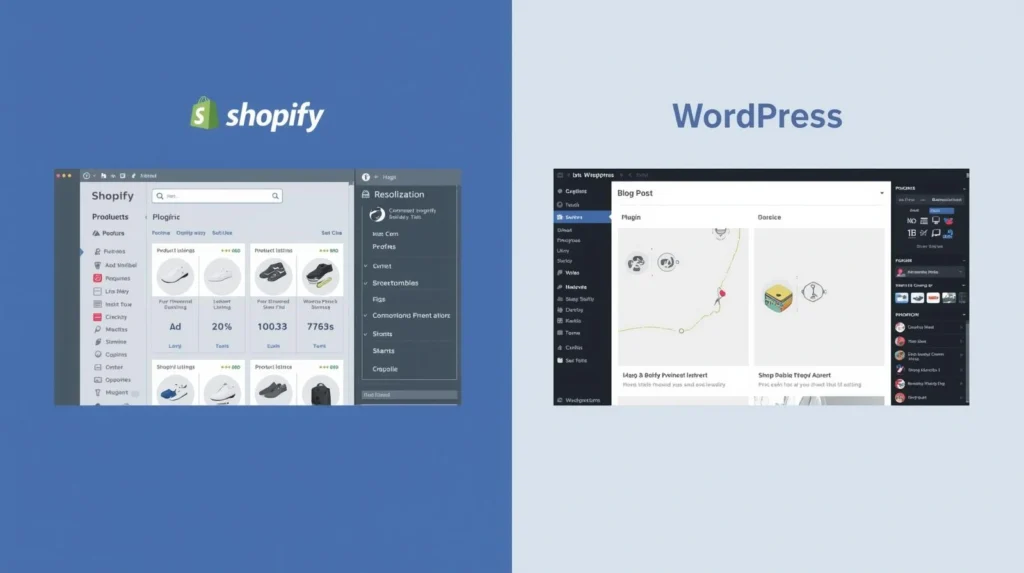
Shopify is an all-in-one ecommerce platform that allows you to quickly set up, manage, and scale your online store. It’s built specifically for ecommerce, offering a streamlined, user-friendly experience with built-in tools for payment processing, shipping, and inventory management.
On the other hand, WordPress is a content management system (CMS) with extensive customization options. It’s incredibly versatile and can be used for blogging, portfolio websites, and ecommerce with the help of plugins like WooCommerce. While WordPress provides greater flexibility, it may require more technical expertise and extra plugins for ecommerce functionality.
Pro Tip:
If you’re a business owner looking for a simple, hassle-free ecommerce solution, Shopify may be the better choice. However, if you need complete control and flexibility over your website’s design and features, WordPress with WooCommerce is worth considering.
Why Choose Shopify for Ecommerce Website Development?
If you’re looking for an ecommerce website developer who can deliver a fast, secure, and efficient store setup, Shopify is your go-to platform. Here’s why:
- Ease of Use: Shopify’s user interface is intuitive, making it easy for anyone—regardless of technical expertise—to create an online store.
- All-in-One Solution: Shopify takes care of hosting, security, and updates, so you don’t have to worry about managing multiple services.
- Built-in Ecommerce Features: Shopify has a host of ecommerce-specific features, including payment gateways, inventory management, and abandoned cart recovery.
- Scalability: Shopify allows businesses to grow effortlessly. As your store expands, you can upgrade to more advanced plans and add features as needed.
Real-World Example:
One of the largest brands in the world, Gymshark, began with Shopify. The fitness apparel brand leveraged Shopify’s scalability to grow into a multi-million-dollar business, showcasing how effective the platform is for ecommerce growth.
Why Choose WordPress for Ecommerce Website Design?
If you’re leaning toward a WordPress website design for your online store, you’re likely looking for customization and control. Here’s what WordPress brings to the table:
- Customization: WordPress offers unmatched flexibility in terms of design and functionality. With thousands of themes and plugins, you can customize your store to meet specific business needs.
- Cost-Effective: WordPress itself is free, and many plugins (like WooCommerce) are also available at no cost. You only need to pay for hosting, themes, and additional premium plugins.
- SEO Advantage: WordPress is known for being SEO-friendly. With plugins like Yoast SEO, you can optimize your content and product pages to rank better in search engines.
- Open-Source: With WordPress, you have full access to the code. This allows web developers to tailor the website to your exact specifications.
Case Study:
The Blinds by Phone company shifted its ecommerce store to WordPress using WooCommerce. They were able to implement highly tailored solutions for product customization and payment options, which helped them better serve their customers and increase conversions.
Shopify vs WordPress: Which One is More Cost-Effective?
The cost of setting up an online store varies depending on your choice of platform. Here’s a breakdown:
- Shopify: Shopify’s pricing plans range from $39/month to $399/month, depending on the features and scalability you need. This includes hosting, SSL certificates, and updates. However, transaction fees apply unless you use Shopify Payments.
- WordPress: WordPress itself is free, but you’ll need to pay for hosting (which can range from $5 to $50/month), domain registration, and premium themes and plugins. With the addition of WooCommerce (which is free, but can require paid extensions), the overall cost can be lower than Shopify, but only if you manage the site yourself.
Pro Tip:
For a budget-conscious business owner looking to minimize initial costs, WordPress may seem more affordable. However, once you start adding premium themes, plugins, and professional services, the costs can quickly add up. Shopify, on the other hand, includes many of these features within its pricing plans.
Which Platform Offers Better Scalability?
When it comes to growing your online business, scalability is essential. Here’s how both platforms compare:
- Shopify: As a fully managed platform, Shopify can handle high traffic volumes and large product inventories. As your business grows, you can easily upgrade to higher plans with more advanced features.
- WordPress: WordPress can also scale well, but it may require additional management. You may need to upgrade hosting plans, install additional plugins, or optimize your website for better performance.
Real-World Example:
When Allbirds, a sustainable shoe company, switched to Shopify, they were able to scale their business smoothly, handling a surge in orders without the need for additional technical resources.
Which Platform is Better for SEO?
SEO is critical for driving organic traffic to your ecommerce store. Let’s compare how Shopify and WordPress stack up:
- Shopify: Shopify offers built-in SEO features such as editable meta tags, automatic sitemaps, and clean URLs. However, customization options are more limited compared to WordPress.
- WordPress: WordPress is widely regarded as the best CMS for SEO. With plugins like Yoast SEO, you can fully control title tags, meta descriptions, and schema markup, giving you an edge in search engine rankings.
Pro Tip:
If SEO is a major priority for your ecommerce business, WordPress with the right plugins will give you more control over optimization. However, Shopify can still perform well with proper settings and third-party apps.
Security: Shopify vs WordPress
Security is a major concern for any online store, as breaches can lead to data loss, financial damage, and loss of customer trust.
- Shopify: Shopify is fully secure and compliant with PCI-DSS standards, meaning it automatically takes care of payment security, SSL certificates, and software updates.
- WordPress: Security on WordPress largely depends on your hosting provider and the plugins you use. While WordPress is secure out-of-the-box, you’ll need to manually install SSL certificates, keep plugins updated, and implement additional security measures to safeguard your site.
Pro Tip:
If you prefer a hands-off approach to security, Shopify is the better option. However, WordPress can also be secure with the right hosting and additional security plugins like Wordfence.
Which Platform Offers Better Customer Support?
When running an ecommerce business, reliable customer support is crucial for troubleshooting and resolving issues quickly.
- Shopify: Shopify offers 24/7 customer support via chat, email, and phone. They also have a vast knowledge base, forums, and a Shopify Experts marketplace for additional help.
- WordPress: WordPress has a large community and support forum, but it doesn’t offer direct customer support unless you pay for premium themes or plugins with support included.
Conclusion: Which Is the Right Choice for You?
Choosing between Shopify website development and WordPress website design ultimately comes down to your business needs:
- If you want a quick, user-friendly solution with built-in ecommerce features and minimal technical hassle, Shopify is your best bet.
- If you need maximum flexibility, are comfortable with a steeper learning curve, and have the time and resources for ongoing management, WordPress with WooCommerce will offer greater customization and control.
Both platforms have their strengths, and the best choice depends on your goals, technical expertise, and budget.
Call to Action:
Are you ready to build your dream ecommerce store? Whether you choose Shopify or WordPress, make sure to partner with an ecommerce website developer who understands your vision and can help you execute it. Start today and set your business up for success!
FAQs
1. Is Shopify better for beginners than WordPress?
Yes, Shopify is easier for beginners because it’s a fully managed platform that handles all the technical aspects, while WordPress requires more customization.
2. Can I migrate from Shopify to WordPress?
Yes, you can migrate from Shopify to WordPress, though it involves exporting your data and manually setting up the new store.
3. Does Shopify support multi-currency?
Yes, Shopify supports multi-currency out of the box, which is great for businesses looking to sell internationally.
4. Is WordPress better for SEO than Shopify?
While both platforms are SEO-friendly, WordPress offers more advanced SEO customization options with plugins like Yoast SEO.
5. Which platform has better security features?
Shopify offers built-in security features, including PCI compliance and SSL certificates. WordPress requires you to implement these features manually, depending on your hosting provider.
6. Which platform is more cost-effective in the long run?
WordPress may be more cost-effective if you handle things yourself. However, Shopify’s all-in-one pricing can be a good value for those who want a hassle-free experience.
7. Can I integrate third-party apps with both platforms?
Yes, both platforms allow integrations with third-party apps and services to enhance functionality, though Shopify has a wider range of built-in integrations.