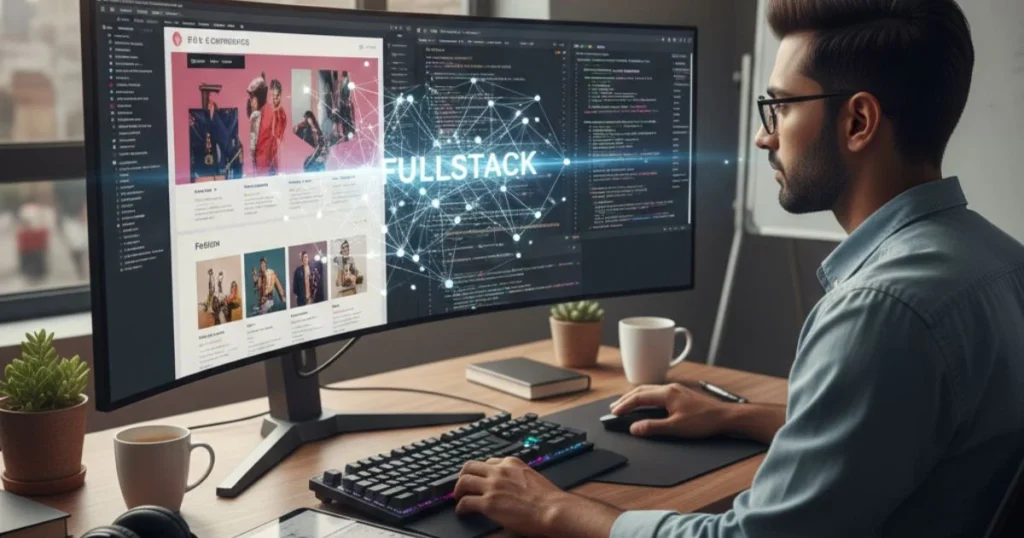
Have you ever found yourself wondering whether hiring a Fullstack Developer is the right decision for your business or project? The idea of getting a comprehensive solution that handles both the front-end and back-end of your web project sounds tempting. But is it really the best choice? And how can you ensure that the right professional fits into your team structure?
In today’s fast-paced digital world, companies are rapidly moving towards all-in-one solutions that streamline their workflows. A versatile engineer offers exactly that—someone capable of handling both the client-side and server-side development, making them an invaluable asset. However, the decision to hire one is not as simple as it seems. Understanding the depth of what an end-to-end specialist brings to the table can help you make the right choice for your business longevity.
By the end of this post, you’ll have a clear understanding of what this development role entails, how these professionals work, and the unique benefits they bring to your web development projects.
What Exactly is a Fullstack Specialist?
A versatile software engineer is a professional proficient in both front-end and back-end development. Unlike specialized developers who focus on a single layer, these experts navigate the entire software stack. This means they can work on the user-facing aspects (front-end) as well as the server-side logic (back-end) of a web application or website.
The Architecture of the “Stack”
To understand the role, one must understand the layers involved. A “Stack” refers to the combination of programming languages, technologies, and software products that make up an ecosystem. These professionals are masters of the “End-to-End” process, ensuring that the data stored in the database is correctly fetched by the server logic and beautifully presented on the user’s screen.
Front-End vs. Back-End: What’s the Difference?
Managing expectations begins with understanding the two distinct worlds these engineers inhabit every day:
-
Front-End (The Client-Side): This is the part of a website or web application that users interact with directly. It includes everything from buttons and menus to the overall layout and design. Professionals use technologies like HTML5, CSS3, and JavaScript. In 2026, they also utilize advanced frameworks like React, Angular, or Vue.js to create engaging, responsive user interfaces that work across all devices.
-
Back-End (The Server-Side): The back-end is where the magic happens behind the scenes. It involves working with servers, databases, APIs, and application logic. Technologies often used in this layer include Node.js, Python, Java, Ruby, PHP, and databases like MySQL, PostgreSQL, and MongoDB. This layer ensures that the application is secure, fast, and scalable.
Why Should You Hire a Fullstack Developer?
Cost Efficiency and Time Savings
Hiring a versatile professional often results in cost savings and faster development timelines. Instead of hiring separate front-end and back-end developers, you can consolidate both roles into one professional.
For example, imagine launching an e-commerce platform. Instead of managing two teams for front-end design and back-end database integration, a single expert can handle both. This reduces overhead costs, minimizes project management challenges, and significantly reduces the time-to-launch. This is particularly beneficial for startups or businesses working with limited budgets or tight deadlines.
Flexibility and Holistic Problem Solving
These developers have a holistic understanding of how web applications work. They see the “big picture” and can troubleshoot across different layers of the application. Whether it’s a UI bug or a database connection issue, they are equipped to handle it without needing to consult a second developer.
This flexibility enables them to adapt and solve complex problems that arise during development. For instance, they may notice performance issues that need optimization or find ways to improve the UX/UI while developing back-end features, ensuring a cohesive final product.
The Modern Tech Stacks of 2026
When working with a generalist, they will likely suggest a specific “Stack” based on your project needs. Understanding these is vital for your project’s future scalability:
-
MERN Stack: (MongoDB, Express.js, React, Node.js). This is currently the most popular choice for modern startups. It uses JavaScript throughout the entire stack, making the code highly reusable and efficient.
-
MEAN Stack: (MongoDB, Express.js, Angular, Node.js). Similar to MERN, but uses Angular for the frontend. This is preferred by larger enterprises for its structural rigidity and security features.
-
LAMP Stack: (Linux, Apache, MySQL, PHP). The classic choice for content-heavy sites and those built on WordPress. It is highly reliable and easy to host.
-
Python-Django: Often chosen for projects involving Artificial Intelligence or heavy data processing. It is known for its “Batteries Included” philosophy, meaning it comes with many built-in features for security and authentication.
How Do These Professionals Collaborate in a Team?
Communication and Collaboration
Although they can work independently, collaboration is still key in a corporate environment. They often work closely with other stakeholders, including:
-
UX/UI Designers: To ensure the visual design is technically implementable.
-
Project Managers: To provide realistic timelines and update stakeholders on the software development life cycle (SDLC).
-
Quality Assurance (QA) Testers: To assist in unit testing and ensuring the code is bug-free across all layers.
Fullstack specialists must be able to convey technical aspects in simple terms, ensuring that the design and functionality align with the overall business vision.
Case Study: Scaling a Startup in Pakistan
A new startup in Pakistan was looking to build an online food delivery service. The team hired a versatile developer who worked on the entire application—from the responsive front-end interface to the back-end integration with payment gateways and delivery tracking systems.
With a tight budget, the startup was able to save on hiring multiple specialists. The developer helped them scale the platform quickly while maintaining a seamless user experience. The business saw a 40% increase in conversions within the first month of launch due to the effective and cohesive web architecture.
Essential Skills to Expect
To deliver end-to-end solutions, a developer must be proficient in a wide range of technologies:
-
Front-End Languages: HTML5, CSS3, JavaScript (ES6+).
-
Modern Frameworks: React.js, Vue.js, or Angular.
-
Back-End Languages: Node.js, Python, or PHP.
-
Database Management: SQL (MySQL) and NoSQL (MongoDB).
-
DevOps & Deployment: Experience with AWS, Google Cloud, or Azure.
-
Version Control: Proficiency in Git for code collaboration.
Pro Tip: Look for developers with specialized skills in platforms like WordPress or e-commerce builders if your project is platform-specific. This ensures the backend logic aligns with the CMS limitations.
Addressing Common Challenges
-
Imbalanced Skillsets: Some developers may lean more toward the front-end than the back-end. You must identify where your project needs the most “weight” before hiring.
-
Technical Debt: Because one person handles everything, there is a risk of code becoming messy if they are rushed. Regular code reviews are essential.
-
Communication Gaps: If the developer is not integrated with the design team, the final UI might lack the “polish” of a dedicated designer.
Conclusion
Hiring a Fullstack Developer offers significant advantages, such as cost savings, faster development cycles, and the flexibility to manage both the front-end and back-end of your project. However, it’s crucial to set clear expectations and ensure good communication from the start to avoid challenges. Whether you’re building a WordPress website, an e-commerce platform, or a custom web app, this versatile role remains a valuable asset in bringing your digital vision to life in 2026.
Detailed FAQ Section (Expanded)
1. What is the fundamental role of an end-to-end developer? They are software engineers skilled in both the presentation layer (frontend) and the data layer (backend), capable of handling all aspects of a web application from design to database.
2. How much do they typically charge? Hourly rates vary by region. In the USA, they range from $50 to $150 per hour. In Pakistan, the range is PKR 2,500 to 15,000 per hour depending on seniority and the complexity of the tech stack.
3. Can they build mobile applications too? Yes. Many use cross-platform frameworks like React Native or Flutter to develop apps that work on both iOS and Android while using a single backend.
4. What are the main benefits for a business website? Hiring one person instead of two reduces communication friction, cuts hiring costs, and ensures that the person writing the backend logic knows exactly how the frontend will display that data.
5. How do they improve the User Experience (UX)? Because they understand the technical constraints of the backend, they can build frontend features that are faster and more responsive, aligning functionality with design seamlessly.
6. Is a generalist better than a specialist for WordPress? If you need custom theme development and deep database optimization, a generalist with PHP expertise is much better than someone who only knows how to install plugins.
7. How do I measure their success? Success is measured through clean code, meeting project milestones on time, site performance (speed), and the absence of bugs during the final deployment phase.