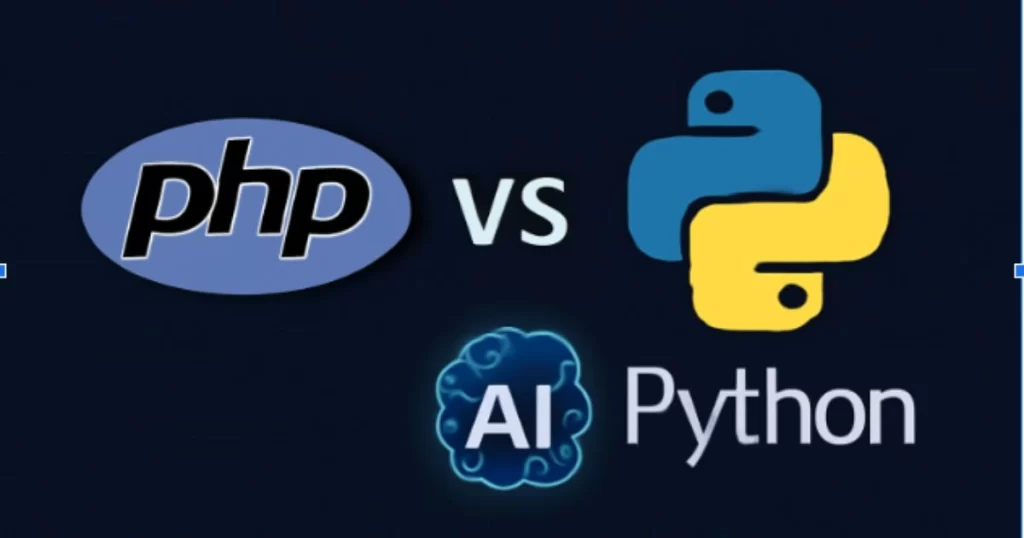
Which language should you choose for AI-driven applications: PHP or Python?
When it comes to developing AI-powered solutions, choosing the right programming language is crucial. With so many options available, developers often find themselves torn between different languages, each offering its unique strengths and weaknesses. Comparing PHP and Python are two of the most popular programming languages in the development community, but they serve different purposes. While PHP is widely used for web development, Python has become the go-to language for AI applications.
But does this mean that Python is always the better choice for AI-driven applications, or is there a case to be made for PHP? Let’s explore the strengths and weaknesses of each language in the context of AI development and help you decide which one is best suited for your needs.
Professional Website Development & SEO Services – Grow Online Fast
Why Should You Consider PHP for AI-Driven Applications?
Is PHP Even Relevant for AI Development?
PHP (Hypertext Preprocessor) has been a dominant player in web development for many years. It powers major platforms like WordPress, Facebook, and many e-commerce websites. However, when it comes to AI, PHP is not the first language that comes to mind. Historically, AI development has been associated with languages like Python, R, and Java. But that doesn’t mean PHP doesn’t have any relevance in AI-driven applications.
PHP’s strengths lie in its simplicity, vast ecosystem, and ease of integration with existing web frameworks. For certain types of AI-driven applications, PHP can be effective. For example, if you’re working on a web-based AI chatbot or need to integrate AI functionality into an existing PHP-based web application, PHP may be the better choice. With the help of PHP AI libraries and frameworks, it’s possible to leverage machine learning and other AI techniques to some extent.
However, PHP is not typically used to build sophisticated AI models from scratch, as its ecosystem doesn’t offer the same breadth of tools and libraries that Python does.
What Are the Strengths of PHP in Web-Based AI Solutions?
While PHP may not be the go-to choice for training deep learning models or complex neural networks, it excels in web development. If you’re looking to build AI-based solutions that need to be integrated directly into a web environment, PHP offers significant advantages:
- Ecosystem for Web Development: PHP is deeply integrated into most web hosting environments, making it an excellent choice for AI projects that need to run on the web. If your AI application is centered around user interaction through a browser, PHP can manage the server-side operations, while AI models can be integrated via APIs.
- Simple Integration with Databases: Most AI applications require a backend to store and retrieve large datasets. PHP seamlessly integrates with databases like MySQL, PostgreSQL, and NoSQL solutions. This is useful when building applications that need to handle significant data storage, which is common in AI-driven projects.
- Scalability: PHP’s ability to scale efficiently through frameworks like Laravel or Symfony is important when building AI applications that need to handle high levels of traffic or complex tasks in real-time.
Despite these advantages, the lack of AI-specific libraries means that PHP will need to rely on third-party solutions for AI functions, such as TensorFlow, which are better supported by Python.

Why Is Python the Go-To Language for AI Applications?
What Makes Python So Popular for AI Development?
- Python has emerged as the dominant programming language for AI, machine learning (ML), and deep learning (DL) applications. Thanks to its simplicity, readability, and powerful libraries, Python is widely preferred by data scientists, researchers, and AI practitioners.
- Python offers robust support for AI tasks, which is why it is the language of choice for building AI models, training algorithms, and implementing neural networks. The language’s clean syntax and vast ecosystem of libraries, including TensorFlow, Keras, PyTorch, and scikit-learn, make it particularly well-suited for AI-driven applications.
How Does Python Accelerate AI Development?
- Extensive Libraries and Frameworks: Python boasts an extensive collection of libraries and frameworks that are explicitly designed for AI and machine learning tasks. Libraries like NumPy and Pandas make it easy to process and manipulate data, while deep learning frameworks like TensorFlow and PyTorch offer powerful tools for building complex models and training neural networks. These libraries save developers time by providing pre-built functions and optimized code for AI tasks.
- Data Science and Machine Learning: Python is widely used for data science because it allows developers to efficiently work with data, apply statistical models, and visualize the results. Since AI is heavily reliant on data, Python’s capabilities make it the top choice for building machine learning algorithms and training models. Its syntax is also conducive to experimentation, which is essential for researchers and developers working with AI.
- Community and Support: Python has a large and active community of developers and researchers who contribute to the language’s growth. This makes finding solutions to problems, tutorials, and examples relatively easy. Whether you’re a beginner or an advanced developer, Python’s AI community provides ample resources for learning and collaboration.
- Flexibility and Versatility: Python is a general-purpose language that can handle both small tasks and large-scale applications. Its versatility allows it to be used across various stages of AI development—from data preprocessing to training complex models and even deploying AI applications.
How Python’s Libraries Make AI Development Easy
Python’s libraries make complex AI tasks more accessible. Here’s a breakdown of some key libraries for AI development:
- TensorFlow and Keras: TensorFlow is an open-source framework for building and training machine learning models. Keras, which is built on top of TensorFlow, provides an easy-to-use API for developing deep learning models. Both libraries are popular in the AI community for building advanced neural networks.
- PyTorch: Another deep learning framework, PyTorch is known for its flexibility and dynamic computation graph, making it ideal for research and experimentation. It’s also widely adopted for developing AI applications.
- scikit-learn: This machine learning library is perfect for those who are just starting with AI. It offers simple tools for data analysis and supports a range of algorithms, including classification, regression, and clustering.
- Pandas: Data handling is an essential part of AI, and Pandas simplifies data manipulation and cleaning. This library provides data structures that make it easier to load, manipulate, and analyze data.
These libraries significantly reduce the effort and complexity involved in AI development, enabling developers to build sophisticated AI-driven applications more efficiently.
PHP vs Python: Key Considerations for AI Applications
When Should You Use PHP for AI?
PHP is best suited for web development and integration, especially for projects that require AI features within a web environment. Some scenarios where PHP may be a better choice include:
- When you need to integrate AI features into an existing PHP-based web application.
- When your AI project is not heavily reliant on machine learning algorithms but requires basic automation or rule-based systems.
- If the AI application needs to work seamlessly with a web platform and the use case is relatively straightforward.
- However, for most AI applications that require complex models, machine learning, or neural networks, Python is a far better choice.
When Should You Choose Python for AI?
Python is the undisputed leader for building AI-driven applications, especially when machine learning, deep learning, and data analysis are involved. You should choose Python for AI applications when:
- You need advanced machine learning or deep learning models.
- Your AI application requires heavy data processing and analysis.
- You’re building AI-powered solutions that involve complex algorithms, neural networks, or natural language processing (NLP).
- Python’s vast ecosystem of libraries, frameworks, and community support makes it the best choice for cutting-edge AI development.
Conclusion
In the battle of PHP vs Python, when it comes to AI-driven applications, Python is the clear winner. With its extensive libraries, community support, and powerful frameworks, Python is the go-to language for machine learning, deep learning, and data science. However, PHP still has a place in the AI ecosystem, particularly for integrating AI features into web-based applications. Ultimately, the choice between PHP and Python depends on your specific use case, the complexity of the AI features you’re implementing, and the nature of your project.
Frequently Asked Questions (FAQs)
1. Why is Python the preferred language for AI applications?
Python is preferred for AI because of its simplicity, readability, and the vast number of AI-specific libraries and frameworks it supports. Libraries like TensorFlow, PyTorch, and scikit-learn make it easy to build, train, and deploy AI models.
2. Can PHP be used for AI-driven applications?
While PHP is not typically used for developing sophisticated AI models, it can be useful in integrating AI features into web-based applications. PHP can also interact with AI models developed in Python, enabling AI functionality in PHP-based websites or platforms.
3. Which is better for building a machine learning model: PHP or Python?
Python is far superior for building machine learning models due to its rich ecosystem of machine learning libraries such as TensorFlow, Keras, and scikit-learn. PHP lacks the same level of support for machine learning.
4. When should I choose PHP over Python for AI?
You should choose PHP if your AI-driven project is focused on integrating AI features into an existing PHP-based web application or if the AI functionality is relatively simple, like rule-based automation.
5. Is Python suitable for deep learning applications?
Yes, Python is the go-to language for deep learning. Libraries like TensorFlow, Keras, and PyTorch provide robust support for building and training complex deep learning models.