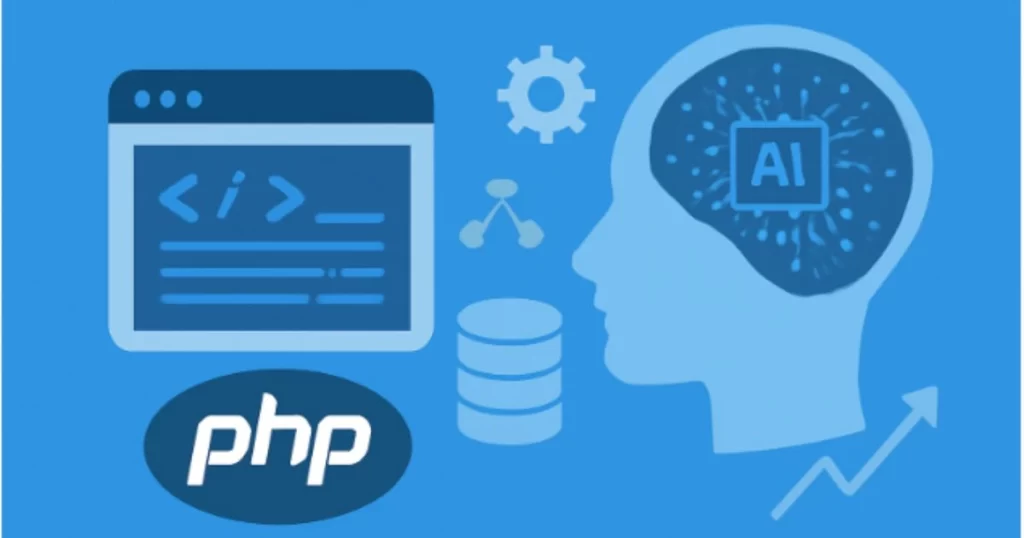
What if you could harness the power of Artificial Intelligence (AI) to enhance your web development process, streamline workflows, and deliver a more personalized user experience? That’s the promise of AI-Powered PHP frameworks. As web development continues to evolve, integrating AI into PHP frameworks is changing the way developers create dynamic, intelligent web applications. But how exactly does AI enhance PHP frameworks, and what makes this combination so powerful? Let’s explore how AI is revolutionizing web development through PHP.
Professional Website Development & SEO Services – Grow Online Fast
What Role Does Artificial Intelligence Play in Web Development?
In web development, Artificial Intelligence is increasingly used to automate tasks, improve the efficiency of processes, and enable web applications to learn and adapt to users’ needs. AI technologies like machine learning, natural language processing, and computer vision are being integrated into websites and applications to offer smart, real-time services.
AI helps web applications become more dynamic by offering features such as:
- Personalization: Tailoring content and recommendations based on user behavior and preferences.
- Chatbots: Automating customer support with intelligent, context-aware virtual assistants.
- Predictive Analytics: Anticipating user behavior and enhancing decision-making with data-driven insights.
- Smart Search: Implementing AI-powered search engines that improve search accuracy and relevance.
By leveraging AI, developers can build websites that not only serve static content but also adapt and respond to user interactions in real-time. The result? A richer, more engaging user experience and better business outcomes.
How Does AI Integrate into PHP Frameworks?
PHP has long been a go-to programming language for web development. Its simplicity, flexibility, and vast ecosystem make it a popular choice among developers for building everything from small websites to large-scale applications. However, when combined with AI, PHP frameworks can take on a whole new dimension.
PHP frameworks like Laravel, Symfony, and CodeIgniter are excellent for building web applications, but they weren’t necessarily designed with AI in mind. However, as AI’s role in web development grows, PHP frameworks are evolving. AI integration into PHP frameworks can be achieved through:
- AI Libraries: Tools like PHP-ML, Rubix ML, and TensorFlow PHP allow developers to introduce machine learning models into PHP-powered applications.
- Third-Party APIs: Integrating AI APIs like Google Cloud AI, IBM Watson, or Microsoft Azure Cognitive Services with PHP frameworks allows developers to quickly incorporate advanced AI features into their web apps without building everything from scratch.
- Custom AI Solutions: For more advanced use cases, developers can create custom machine learning models and integrate them directly into their PHP applications for tasks like image recognition, sentiment analysis, and predictive analytics.
By leveraging these integrations, developers can enhance PHP frameworks with capabilities such as smart chatbots, recommendation systems, or even predictive algorithms—all while still working within the familiar PHP ecosystem.

How Can AI-Powered PHP Frameworks Benefit Web Development?
Does AI Help Improve the User Experience?
One of the key ways AI enhances PHP frameworks is by improving the user experience (UX). By using AI technologies, web applications can become more personalized, intuitive, and responsive to individual users.
For example, imagine an e-commerce website that uses AI-powered recommendation engines. By analyzing user behavior, AI can suggest products that the user is most likely to be interested in, enhancing the shopping experience and boosting conversions. This level of personalization would be difficult to achieve without AI’s ability to process and analyze large amounts of data.
Similarly, AI-driven chatbots or virtual assistants can provide real-time customer support, answer queries, and even resolve issues—all without human intervention. By integrating such AI features into PHP frameworks, developers can create more intelligent and user-friendly websites.
How Does AI in PHP Frameworks Improve Efficiency?
Efficiency is a key factor in web development, and AI can help achieve it by automating many repetitive tasks. This includes everything from image recognition to content moderation, allowing developers to save time and focus on more critical aspects of application development.
For example, using AI-powered image recognition models in PHP can automate the process of tagging and categorizing images based on their content. This reduces the need for manual input and ensures consistent and accurate tagging of multimedia content. Similarly, automated testing powered by AI can detect bugs and potential vulnerabilities in code, speeding up the testing process and improving the quality of the application.
Furthermore, AI in analytics allows developers and business owners to make data-driven decisions by analyzing user interactions and behaviors. This helps optimize the design, functionality, and performance of web applications, ultimately leading to a better product.
What Are the Leading AI-Powered PHP Frameworks?
Some PHP frameworks have already begun to embrace AI, offering easy integration with popular AI tools. Let’s explore a few key PHP frameworks and how they can be enhanced with AI.
1. Laravel: The AI-Friendly Framework
Laravel, one of the most popular PHP frameworks, is well-known for its elegant syntax and scalability. It also plays well with AI by integrating seamlessly with machine learning libraries and AI APIs.
Using Laravel’s Eloquent ORM (Object-Relational Mapping) system, developers can easily manage data for AI models, making it an excellent choice for web applications that require large datasets. By combining Laravel with machine learning libraries like Rubix ML or PHP-ML, developers can build AI-powered applications directly within the Laravel ecosystem. Laravel’s ability to handle complex queries and large databases makes it ideal for implementing AI features like recommendation engines and predictive analytics.
2. Symfony: Robust and Flexible AI Integration
Symfony is another powerful PHP framework that allows for flexible and scalable web application development. With its modular nature, developers can integrate third-party AI services and libraries into Symfony-based applications.
Symfony’s components are designed for easy integration with machine learning models. It also supports various AI-driven services, such as Google Cloud AI or IBM Watson. By using Symfony in combination with AI-powered tools, developers can create applications that leverage NLP (Natural Language Processing), speech recognition, and even predictive modeling.
3. CodeIgniter: Lightweight AI Solutions
CodeIgniter is a lightweight PHP framework known for its small footprint and fast performance. While it’s not as feature-rich as Laravel or Symfony, CodeIgniter still allows developers to integrate AI functionalities through APIs and libraries.
With tools like PHP-ML, CodeIgniter developers can quickly incorporate machine learning algorithms into their applications. Its simplicity makes it a great choice for smaller projects or AI-driven features that don’t require the complexity of a larger framework like Laravel.
Can AI-Powered PHP Frameworks Improve Security?
Security is always a concern in web development, and AI can help PHP frameworks improve security in several ways:
- AI for Fraud Detection: AI can analyze user behaviors and flag unusual activity that may indicate fraud or malicious behavior. This can be particularly useful for e-commerce platforms and banking websites.
- Automated Vulnerability Scanning: AI-powered tools can automatically scan PHP code for potential security vulnerabilities and suggest fixes before an application goes live.
- User Authentication: AI can enhance user authentication by implementing biometric recognition, such as facial recognition or fingerprint scanning, ensuring that only authorized users can access sensitive information.
With these AI capabilities, developers can create more secure web applications that are less vulnerable to cyber threats.
What Are the Future Prospects of AI in PHP Frameworks?
As AI continues to evolve, we can expect to see even more sophisticated tools and features integrated into PHP frameworks. With advancements in AI technologies like deep learning and reinforcement learning, PHP frameworks could soon be capable of handling complex decision-making processes and offering more dynamic, real-time user experiences.
For example, future versions of PHP frameworks could offer native AI support, allowing developers to build intelligent applications without needing third-party libraries or APIs. AI could also play a bigger role in automating web development tasks, from code generation to debugging and optimization, ultimately making the development process more efficient and accessible to all.
Conclusion
In conclusion, AI is revolutionizing web development, and AI-powered PHP frameworks are at the forefront of this change. By integrating machine learning, predictive analytics,
and natural language processing into PHP-based web applications, developers can create smarter, more efficient, and personalized websites that meet modern user expectations.
Frequently Asked Questions (FAQs)
1. What is AI in PHP frameworks?
AI in PHP frameworks refers to the integration of artificial intelligence technologies, such as machine learning, natural language processing, and computer vision, into PHP-based web applications. This integration enhances the functionality of the application by offering smarter, more personalized features.
2. How can AI improve web development?
AI improves web development by automating tasks, providing real-time data insights, and enhancing the user experience through personalization, chatbots, and predictive analytics. It also helps with faster and more efficient development processes by reducing manual work.
3. Can I integrate AI into Laravel?
Yes, Laravel can be integrated with AI by using machine learning libraries like Rubix ML and PHP-ML or by connecting to AI APIs like Google Cloud AI or IBM Watson. This allows you to add AI-driven features such as recommendation engines, predictive models, and natural language processing.
4. What are some AI-powered tools for PHP?
Some AI-powered tools for PHP include PHP-ML, Rubix ML, TensorFlow PHP, and AI APIs like Google Cloud AI and IBM Watson. These tools allow developers to integrate machine learning and AI functionality into PHP-based web applications.
5. How does AI enhance web security in PHP?
AI enhances web security by detecting fraudulent activity, scanning code for vulnerabilities, and providing advanced authentication methods such as biometric recognition. AI can also predict and prevent security breaches by analyzing user behavior patterns.
6. Can AI help with web development automation?
Yes, AI can automate various web development tasks, including code generation, testing, and optimization. AI-powered tools can also assist in debugging and vulnerability scanning, improving the development process’s speed and efficiency.
7. What’s the future of AI in PHP frameworks?
The future of AI in PHP frameworks looks promising, with more advanced AI features being integrated into web development. We can expect more native AI support in PHP frameworks, making it easier to build intelligent, adaptive applications directly within the PHP ecosystem.