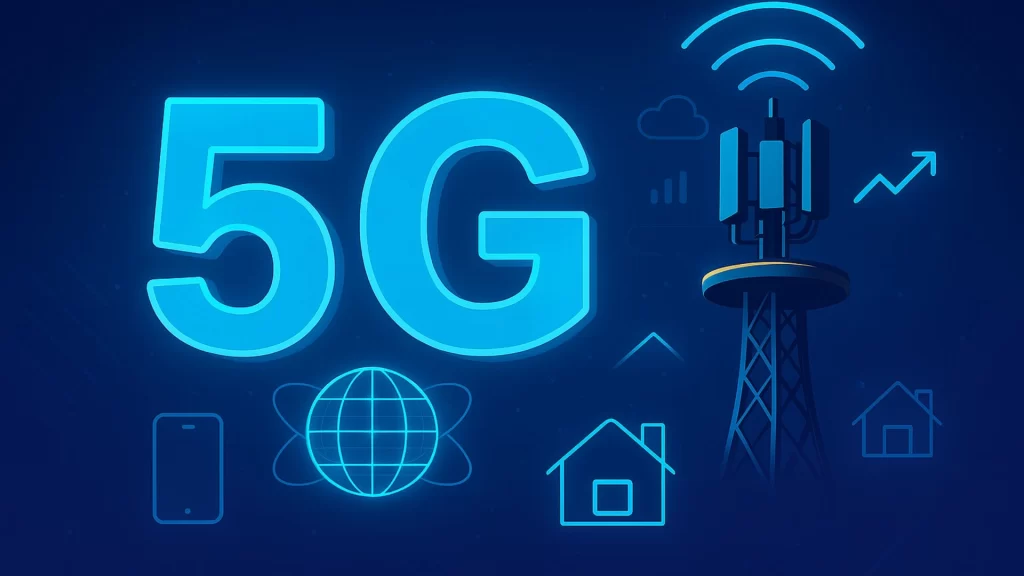
Have you ever wondered how 5G technology is transforming the way we connect, work, and live? The rollout of 5G networks is one of the most significant technological advancements of the past decade. With promises of faster speeds, lower latency, and the ability to connect more devices simultaneously, 5G technology is set to revolutionize industries around the world. But what does 5G mean for your business and the Internet of Things (IoT)? Let’s dive into how 5G is reshaping the landscape of mobile connectivity and what it means for the future of IoT.
Professional Website Development & SEO Services – Grow Online Fast
What is 5G Technology?
5G technology, short for “fifth generation,” is the latest iteration of mobile networks, succeeding 4G LTE. It promises to deliver faster data speeds, lower latency, and the ability to support a massive number of connected devices. But what sets 5G apart from its predecessors?
At its core, 5G technology utilizes new radio frequencies and advanced network architecture to provide significantly improved performance. With theoretical download speeds of up to 20 Gbps, 5G offers speeds that are 20 times faster than 4G, making it ideal for data-intensive applications. Additionally, 5G has a much lower latency—measured in milliseconds—meaning real-time communication and transactions are faster and more reliable.
Beyond speed, 5G networks are designed to handle much higher capacity. This is particularly important as we move towards a world where everything is connected, from smartphones to smart homes, to industrial machines. With 5G, the connectivity of billions of devices will be possible without slowing down the network.
How Does 5G Benefit Businesses?
In a business context, 5G is a game-changer. It can enable your company to streamline operations, improve efficiency, and unlock new opportunities for innovation.
- Faster Data Transfer for Business Operations: With 5G, businesses will experience much faster data transfer speeds. Whether it’s transferring large files or collaborating remotely on high-quality video calls, 5G will make these processes quicker and more efficient, leading to enhanced productivity.
- Improved Customer Experience: As more and more businesses rely on mobile applications, 5G’s faster speeds and lower latency will allow companies to deliver better mobile experiences. For instance, in the retail sector, 5G can enable faster mobile payments, real-time inventory management, and enhanced augmented reality (AR) experiences.
- Enhanced Connectivity for Remote Work: The COVID-19 pandemic showed how important it is to have strong and reliable remote work infrastructure. With 5G technology, employees will be able to connect from anywhere in the world with minimal disruptions, even when using high-bandwidth applications like virtual meetings, cloud collaboration tools, and remote desktop access.
- Automation and Industry 4.0: Businesses across industries, from manufacturing to logistics, will benefit from 5G’s ability to enable automation and support IoT systems. With low-latency communication and massive device connectivity, tasks like predictive maintenance, real-time monitoring, and automated workflows will be more efficient than ever.
What Does 5G Mean for IoT?
IoT (Internet of Things) refers to the network of interconnected devices that communicate and share data with each other. From smart homes and cities to autonomous vehicles and connected healthcare devices, IoT has been steadily growing. However, the full potential of IoT has been limited by the capacity and speed of current networks.
This is where 5G technology comes into play.
- More Devices, Better Connectivity: One of the biggest advantages of 5G is its ability to handle a massive number of connected devices. The current 4G network can struggle with congestion when there are too many devices trying to connect at once. With 5G, the number of connected devices per square kilometer can increase dramatically, which is essential for large-scale IoT applications such as smart cities or autonomous vehicle fleets.
- Low Latency for Real-Time Applications: Many IoT devices require real-time communication for optimal performance. In areas such as healthcare, autonomous driving, and industrial automation, latency must be minimized to ensure quick responses. 5G’s ultra-low latency ensures that IoT devices can function in real time, whether it’s a smart thermostat adjusting the temperature in your home or a self-driving car making split-second decisions.
- Faster Data Transmission: IoT devices generate massive amounts of data that need to be processed and transmitted. 5G networks can handle this volume of data much faster than 4G networks, making it possible to unlock the true potential of IoT applications. For example, a smart city can benefit from the high-speed transmission of data from sensors monitoring traffic flow, pollution levels, and public safety.
- Edge Computing and IoT Integration: Edge computing, which processes data closer to the source, will work in tandem with 5G technology to accelerate IoT applications. With 5G’s low latency and fast data transfer capabilities, edge computing will be more effective, reducing the time it takes to analyze and act on data in real time. This is particularly beneficial in applications like industrial IoT (IIoT), where machines need to make quick decisions based on sensor data.

How Will 5G Impact Mobile Connectivity?
Mobile connectivity is one of the most obvious areas where 5G will have an immediate impact. For consumers, 5G means faster download and upload speeds, improved mobile streaming quality, and better overall connectivity. For businesses, the evolution of mobile networks will open new doors for customer engagement and service delivery.
- Enhanced Mobile Experiences: With 5G, users can download high-definition videos, stream live content, and play online games without experiencing buffering or interruptions. This means that businesses in industries such as entertainment and media can provide a superior customer experience.
- Improved Mobile Services for Business Operations: Employees on the go will benefit from seamless connectivity, allowing them to access enterprise applications, collaborate with colleagues, and interact with customers more effectively. 5G will make mobile business tools more reliable and capable of handling the demands of modern workplaces.
- Faster Mobile Payments and Transactions: With 5G technology, mobile payments will be faster and more secure. Businesses can expect smoother payment processing and reduced transaction times, enhancing the customer experience, especially in retail and hospitality.
What Does the Future of 5G Hold?
The future of 5G networks is incredibly promising, and we’ve only scratched the surface of its potential. As more 5G infrastructure is rolled out globally, we can expect widespread adoption of technologies and services that were previously unimaginable.
- Global Connectivity and Remote Areas: One of the exciting possibilities of 5G is its potential to bring connectivity to remote and underserved areas. With faster and more reliable mobile networks, people in rural areas or emerging markets will have greater access to the internet, bridging the digital divide.
- Integration with Emerging Technologies: 5G will work alongside other emerging technologies such as artificial intelligence (AI), augmented reality (AR), virtual reality (VR), and blockchain to deliver new services and capabilities. As 5G networks become more widely adopted, the combination of these technologies will lead to innovations in sectors ranging from healthcare to entertainment.
- Expansion of Autonomous Systems: 5G will play a crucial role in the expansion of autonomous systems, from self-driving cars to drones. By enabling real-time communication and data transfer, 5G will ensure that these systems operate safely and effectively, making them a reality in everyday life.
Conclusion:
The arrival of 5G technology is not just an upgrade to mobile networks; it’s a paradigm shift that will transform the way businesses operate and how IoT devices interact. With faster speeds, lower latency, and the ability to handle massive numbers of devices, 5G is set to unlock the full potential of IoT, mobile connectivity, and automation.
For businesses, 5G will improve customer experiences, drive operational efficiency, and open up new opportunities for innovation. Whether you’re in manufacturing, healthcare, retail, or any other industry, adopting 5G technology will position your company for success in a hyper-connected world.
As we look to the future, it’s clear that 5G will be at the heart of the next wave of technological advancement. The possibilities are endless, and those who invest in 5G today will be well-equipped to thrive in the digital landscape of tomorrow.
Frequently Asked Questions(FAQs)
1. What is 5G technology?
5G is the fifth generation of mobile network technology, offering faster speeds, lower latency, and the ability to connect a large number of devices simultaneously.
2. How fast is 5G compared to 4G?
5G can deliver speeds up to 20 times faster than 4G, with theoretical download speeds of up to 20 Gbps.
3. How does 5G benefit businesses?
5G provides faster data transfer, improved customer experiences, better remote work capabilities, and supports automation and IoT applications.
4. What is the role of 5G in IoT?
5G enables more connected devices with faster data transmission and lower latency, which is essential for real-time IoT applications in sectors like healthcare, transportation, and manufacturing.
5. How will 5G impact mobile connectivity?
5G will offer enhanced mobile experiences, faster mobile payments, and improved services for businesses, leading to better customer engagement and more efficient operations.
6. When will 5G be widely available?
5G networks are currently being rolled out globally, and while urban areas are seeing widespread coverage, full global adoption will take several years.